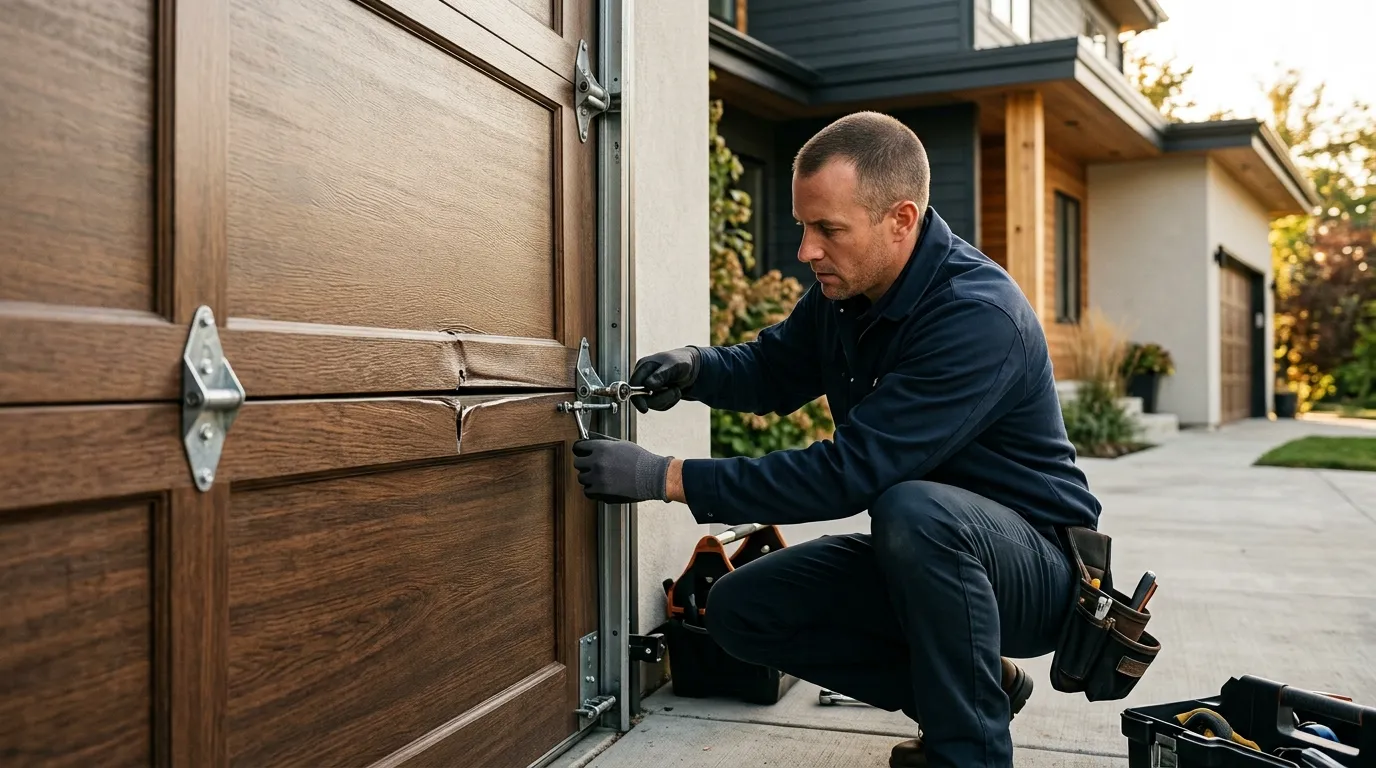
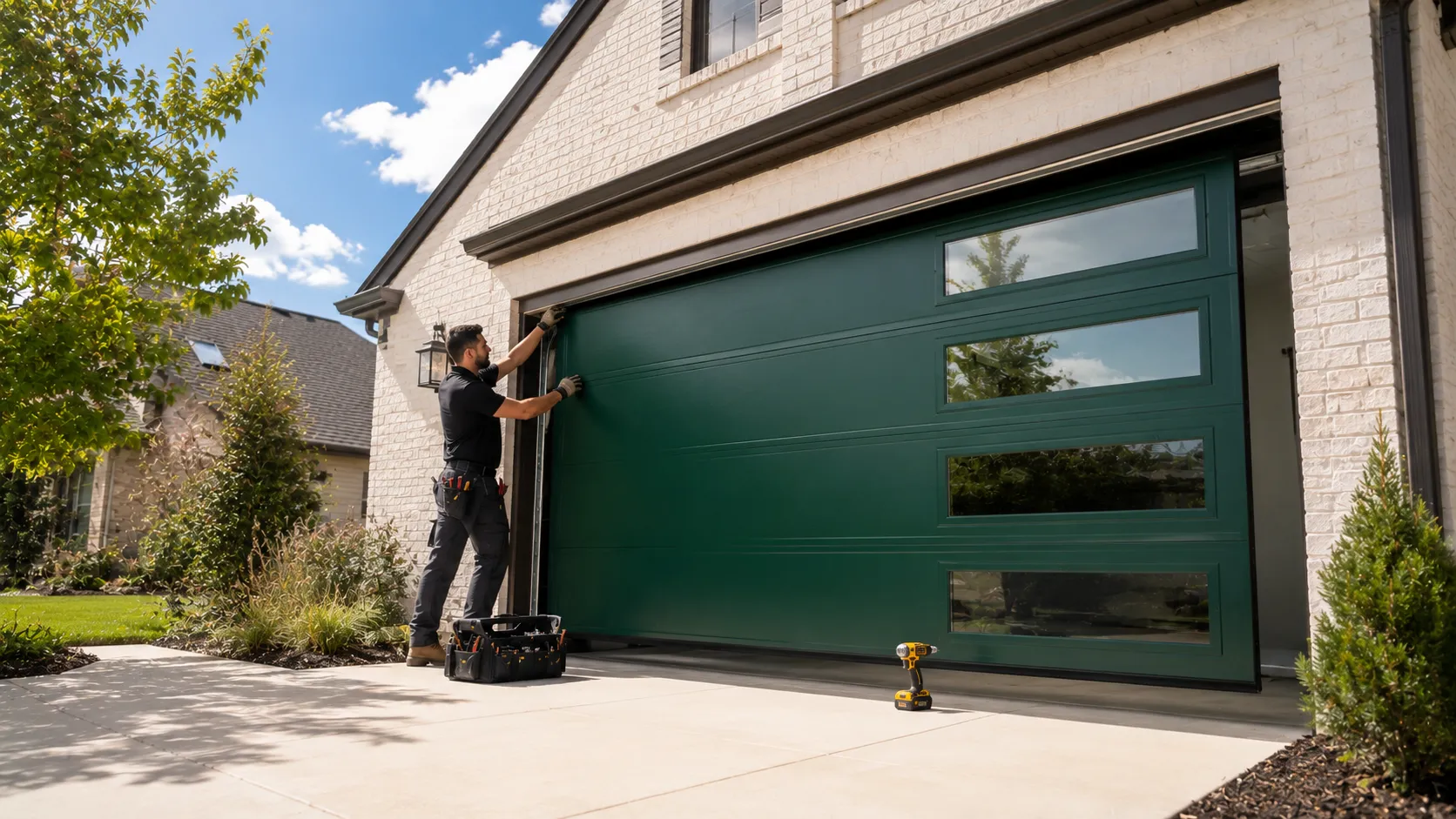
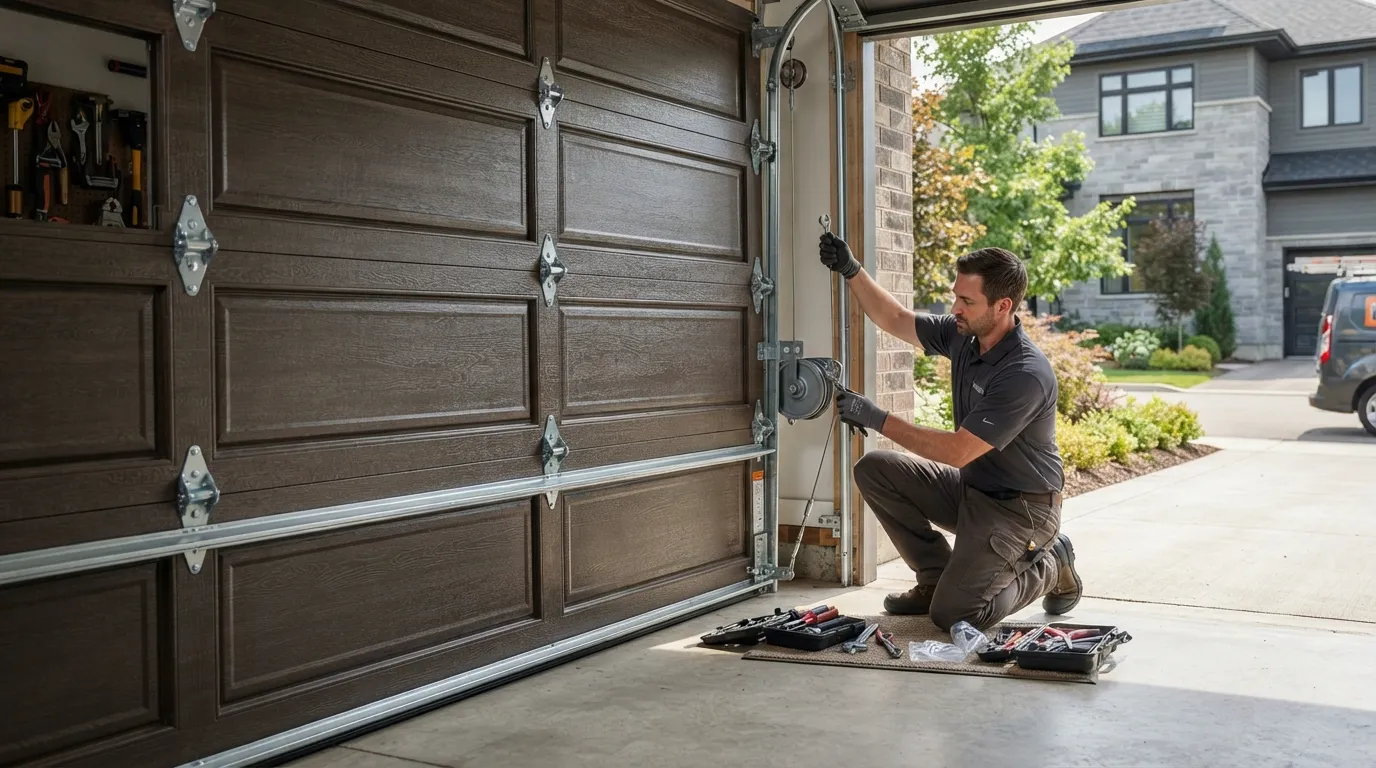
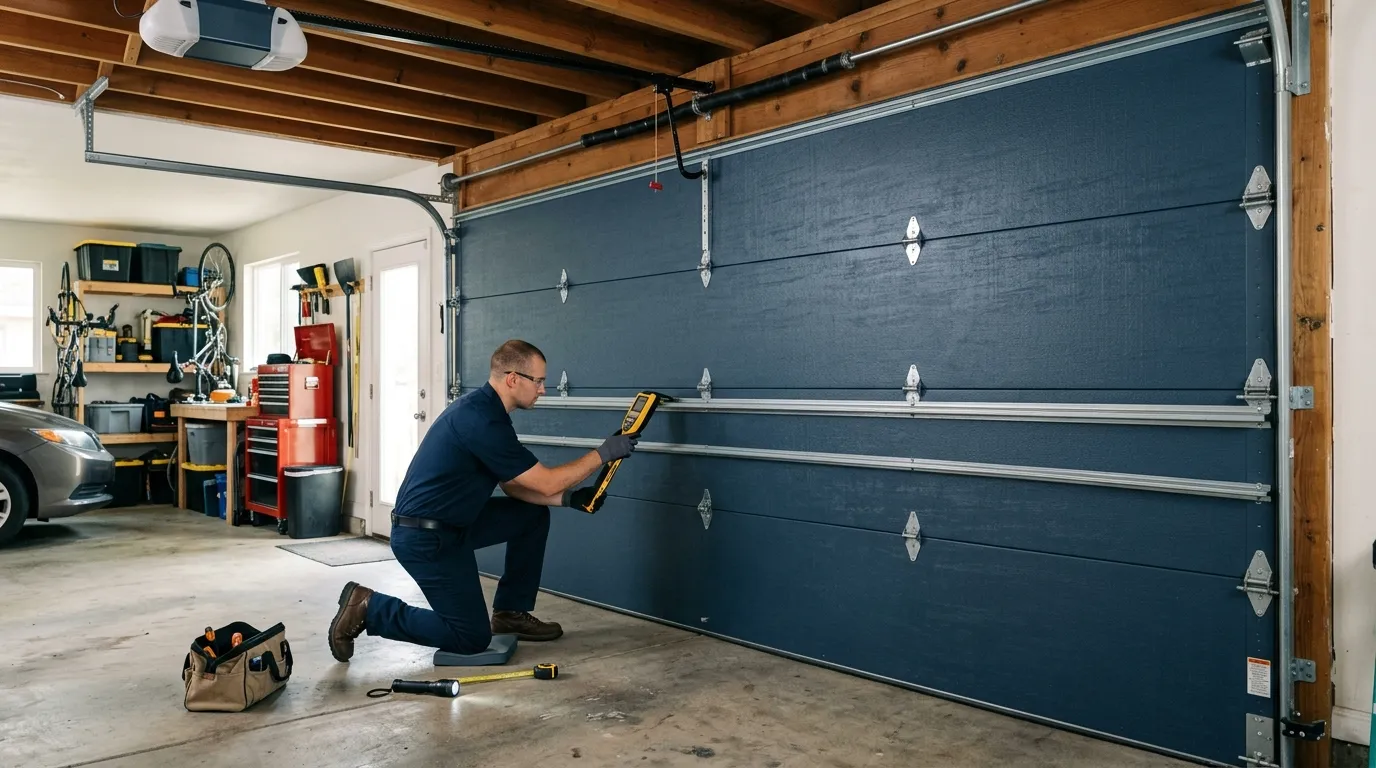
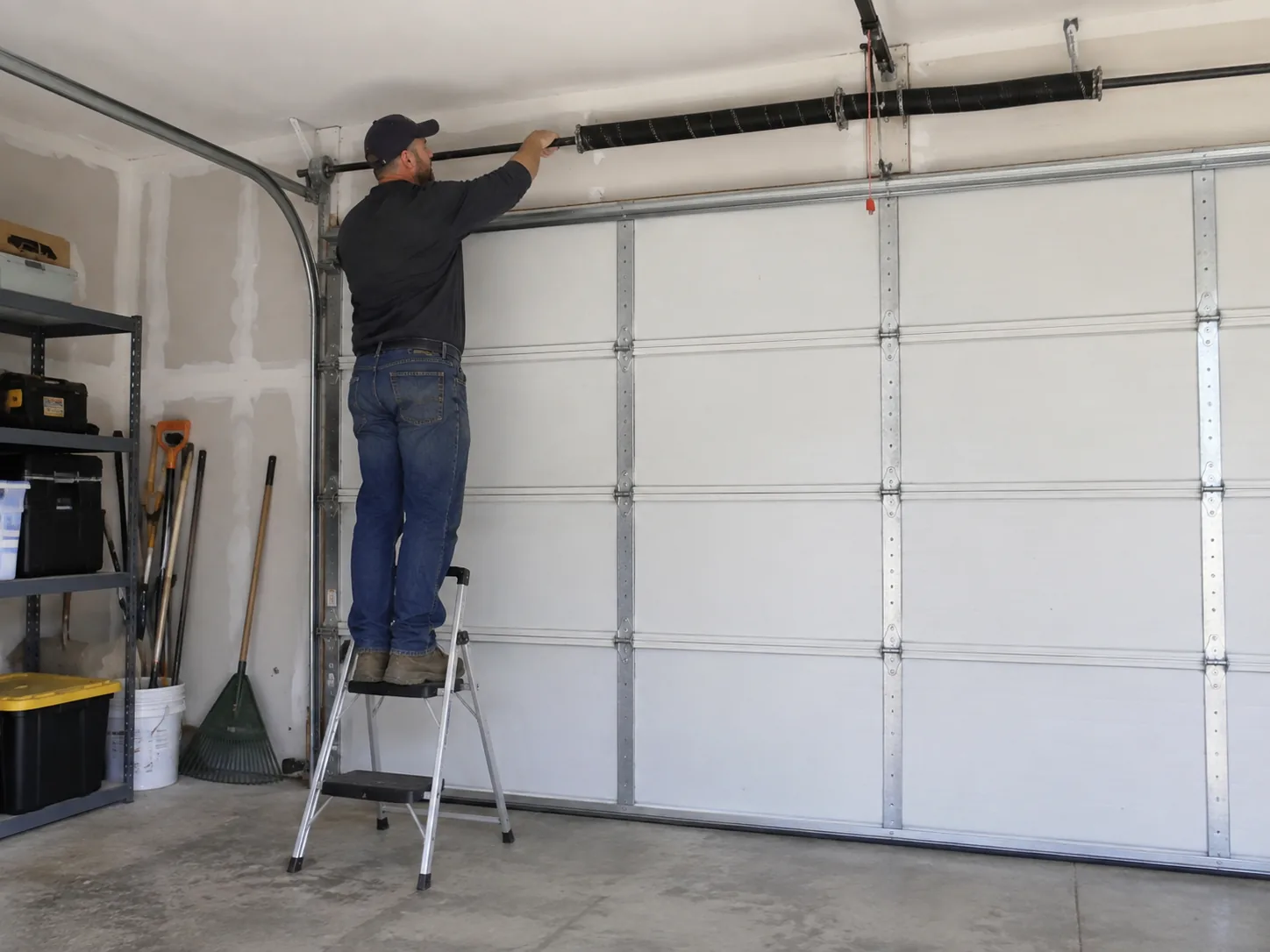
Single-panel replacement starts with matching, not swapping. We measure the section height, the hinge spacing, and the track width against what's actually installed - critical on a Ludlow door old enough to predate today's standard sizing. If the exact panel isn't in stock, it has to be ordered, and that can add days to the job rather than hours; we won't pretend otherwise. Once the panel's in hand, the work itself is straightforward: pull the damaged section, transfer or replace the hinges and rollers riding on it, set the new panel, and recheck the door's balance since one section change can shift the whole door's weight distribution slightly. We test the opener's force settings afterward too, because a door that's been running crooked for months sometimes has the opener compensating for it. One honest limit here: if more than two panels on an old door are damaged or if the frame itself is warped, patching panel by panel stops making financial sense and full door replacement is the better call - we'll tell you when we see that.