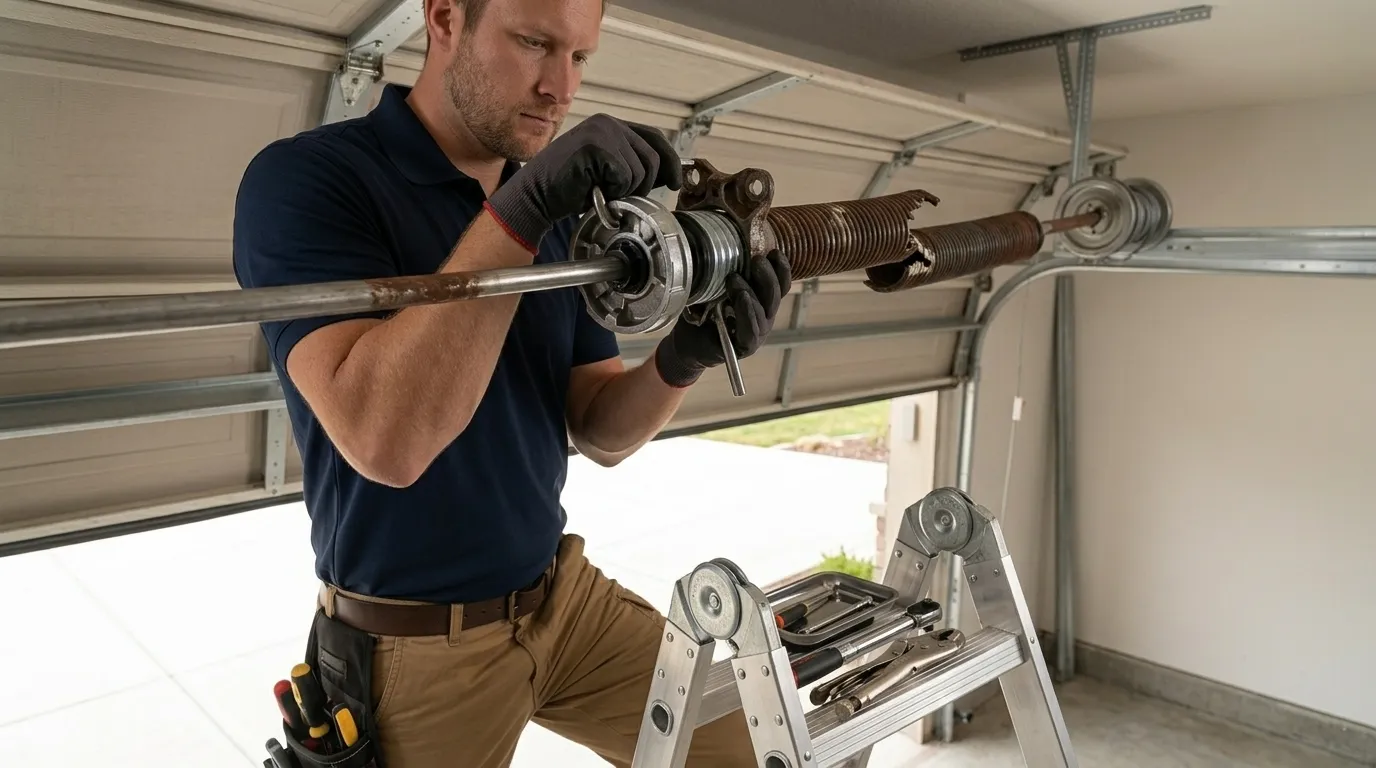
Most of the housing across this part of the Pioneer Valley went up between 1938 and 1989, with the median build year landing around 1965. That matters for springs because a torsion or extension spring has a rated cycle count, and a spring installed when a house was built in the 1960s or 70s has been through decades of open-close cycles already, whether or not anyone's replaced it since. A lot of these homes still run the original spring setup, just fatigued past its rated life.
Cold is the other half of it. This area sits in a severe cold climate band, and steel spring wire loses some flexibility as temperatures drop. A spring that's already near the end of its cycle life will often let go on the first hard cold snap of the year, not because the cold caused the failure but because it was the final stress that a worn spring couldn't absorb anymore. That's why we see a real jump in spring calls right when the weather turns.
Across the 33 named areas we cover in this service territory, the pattern repeats: older stock, harsh winters, springs that were sized for a lighter door decades ago and never upgraded when owners added insulation or a heavier replacement panel. The two things compound each other.