Chicopee, MA

Garage Door Opener Installation for Chicopee's Older Housing Stock

Chicopee homes built mostly between 1938 and 1989 often run original chain-drive openers that struggle in New England cold. We install openers built for this housing stock and this climate.

Garage Door Opener Installation for Chicopee's Older Housing Stock in Chicopee
Same-day service in most cases
Serving Chicopee, MABackground-checked techsHonest, upfront pricingFast local response
1938–1989
Typical build years of local homes
1965
Median year homes were built
Hard winters
Climate that shapes door wear
33
Named areas in our coverage

Local causes

Why It Happens Here

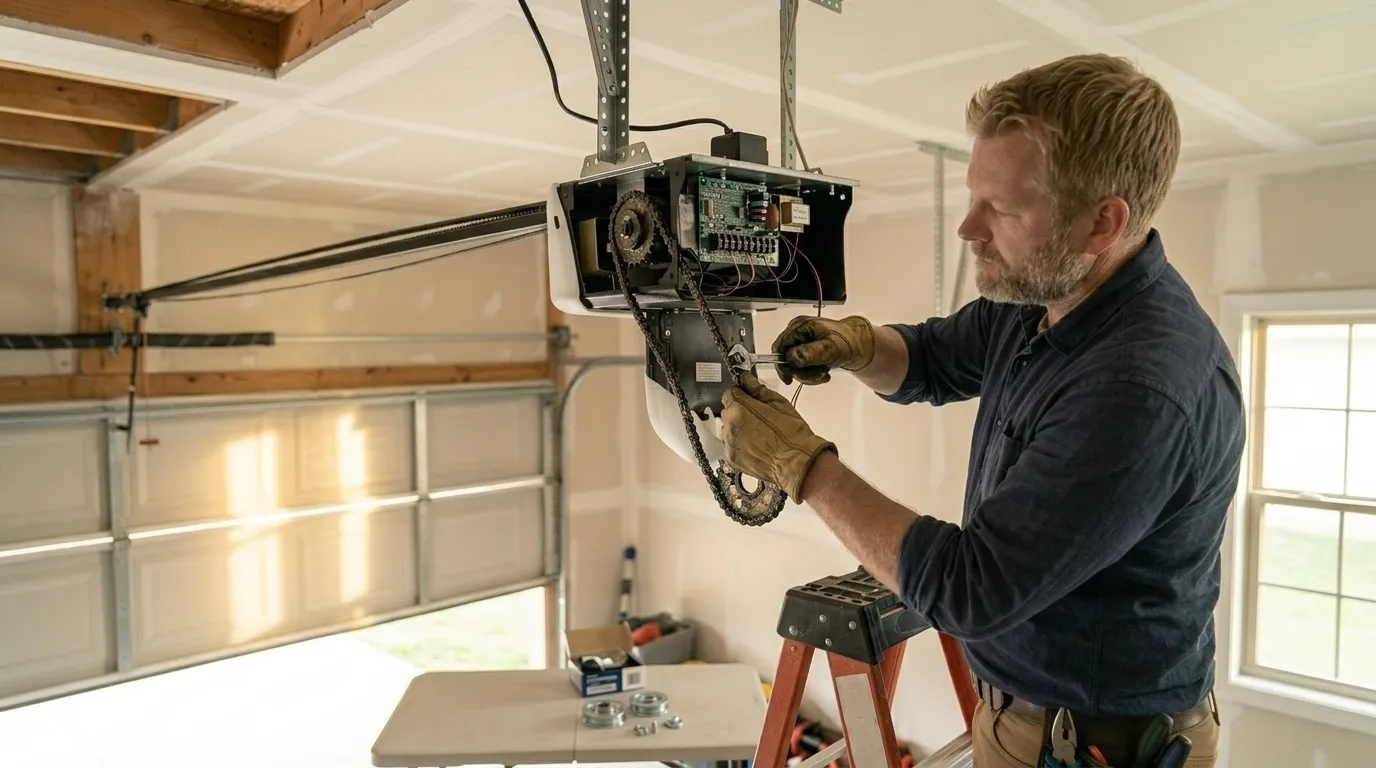
Chicopee's housing stock runs old, with most homes built between 1938 and 1989 and a median build year around 1965. Across the 33 named neighborhoods and nearby towns this shop covers, that same 1960s-70s wave of construction repeats itself, which means a lot of garages still carry the openers that came with the house or a first-generation replacement from decades back. Those units were built before rolling-code security, before soft-start/soft-stop motors, and before anyone worried about a battery backup keeping a door usable during a power cut.

The region also sits in a severe cold climate band, and that matters more than people expect. Chain-drive openers rely on lubricated moving parts and motor windings that don't love repeated freeze-thaw cycles. Grease thickens, chains stretch, and the gear sets inside older units wear faster when the garage swings from near freezing to summer heat every year. A 55-year-old opener wasn't engineered for that many cycles of extreme temperature swing, and it shows. This isn't a defect story - it's a math story. Old motor, old lubricant, decades of cold snaps. Something eventually gives.

Why It Happens Here

DIY or pro

Doing It Yourself

A homeowner can swap a wall switch or replace a remote battery without trouble. Installing a new opener is a different job, and here's the honest limit: this involves working overhead with a spring-loaded door, wiring into household power, and setting travel limits and force settings so the unit doesn't crush something or fail to close all the way.

Force setting complications

Get the force setting wrong and you either have a door that won't seat against a cold concrete slab in January or one that keeps hitting resistance and reversing. There's also the safety sensor alignment - the two eyes near the floor that stop the door from closing on a person or pet.

Sensor alignment challenges

They need a clean line of sight and a secure mount, and in an older Chicopee-area garage with uneven framing or a slab that's settled over sixty-plus years, that alignment can take real trial and error.

DIY compatibility issues

If you're comfortable with a drill, a ladder, and reading a wiring diagram, a basic swap is within reach for some homeowners. If the existing bracket, header, or wiring doesn't match a modern kit - common in houses this age - that's when it stops being a weekend project.

The repair

What the Repair Takes

An opener installation starts with pulling the old unit down, which on a house from the 1965 median era often means dealing with a header bracket that was never sized for today's heavier steel rail systems.

  1. Spring balance priority

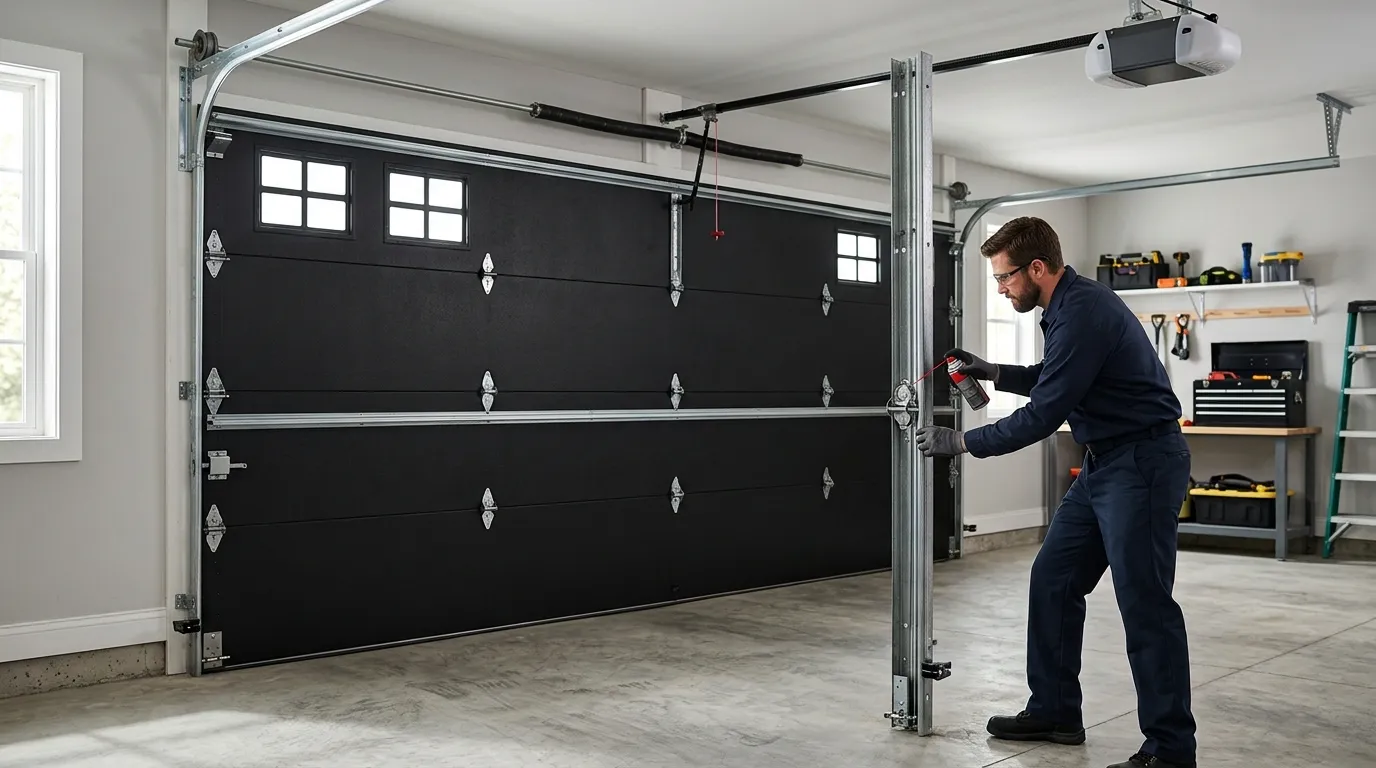
    We check the door's spring balance first, because an opener installed on an unbalanced door burns out fast regardless of how good the motor is - that's true whether the door is original to the house or a later replacement. From there it's mounting the rail, setting the header bracket, wiring in a dedicated outlet or tying into existing power, and programming travel limits, force, and the safety sensors.

  2. Cold climate motor selection

    In this climate band, we also pay attention to how the unit is going to perform once the garage temperature drops well below freezing for stretches of the winter - lubricant choice and belt vs. chain drive both matter more here than in a milder climate.

  3. Door condition prerequisites

    What we won't do is install a new opener on a door with a cracked panel, rotted jamb, or a spring system that's clearly failing - that's a door problem first, and running a new motor against it just moves the failure point somewhere else.

Warning signs

How It Shows Up

The most common early sign in this area's older housing stock is a door that opens fine in warm weather but hesitates, grinds, or stalls partway during a cold stretch - the motor is working harder than it should against stiff, cold-thickened lubricant on aging gears.

Receiver board failure signs

Remote range dropping off, especially from inside a car parked at the far end of a longer driveway, is another sign the receiver board is on its way out. A louder tell is the door reversing for no clear reason, which usually means the force setting has drifted as the motor weakens, or the safety sensors have shifted out of alignment - not uncommon in a garage that's settled over 50-plus years.

Diagnostic blink codes

Some homeowners also notice the wall switch light blinking in a pattern; that's the unit trying to tell you which system failed, though the exact code varies by opener brand and age.

Original opener winter failures

Across the households in this service area - a mix of long-owned homes and newer buyers - the households with original 1960s-70s openers are the ones we see calling most often once a cold winter sets in.

Questions

Common questions

How do I know if I need a new opener or just a repair?

If the motor runs but the door won't hold its force setting, or you're replacing the same part every year or two, a new opener usually costs less over time than repeated repairs on a unit built in the 1960s or 70s. If the door itself is unbalanced or the panel is damaged, fix that first - a new opener won't solve a door problem.

Will a new opener work better in cold weather than my old one?

Modern openers use belt drives and lubricants rated for wider temperature swings, which matters in this severe cold climate band. A newer unit with a properly set force limit handles a frozen or frost-stiff door far more reliably than a decades-old chain-drive motor straining against the same cold every winter.

Can you install an opener on any garage door?

Most doors, yes, but the door has to be properly balanced and structurally sound first. On an older door with a cracked panel or a spring system near failure, we'll flag that before installing anything - putting a new motor on a bad door just shifts the problem, it doesn't fix it.

Do you serve towns near Chicopee too?

Yes, this opener installation service covers the surrounding area, including towns within about a 20-mile radius. Local specifics for each town are covered on that town's own page, but the installation process and equipment described here apply across the service area.

Ready when you are

Need a garage door sorted in Chicopee?

Chicopee Garage Door Pros repairs and installs garage doors, springs and openers in Chicopee, MA and the surrounding area.

CallGet a quote