
Discontinued profile limitation
The honest limitation here: if your door is old enough that the manufacturer no longer makes that panel profile, a single-panel swap isn't always possible at any price, DIY or professional.
Chicopee, MA
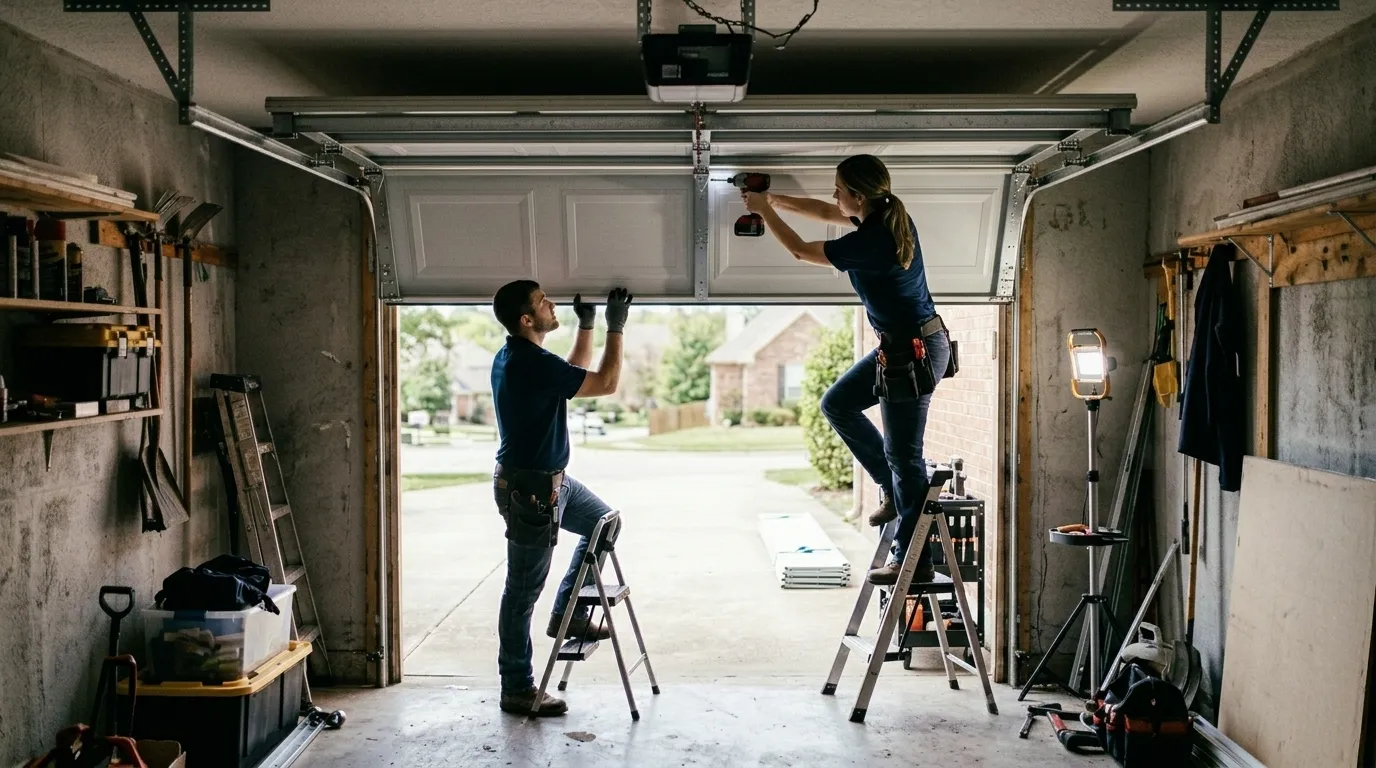
Panel replacement for Chicopee-area homes built between 1938 and 1989, where cold-climate freeze-thaw and aging steel panels are the main cause of dents, rust-through, and cracked seams.
Local causes
Most of the housing this shop works on went up between 1938 and 1989, with the median build year sitting around 1965. That's the era of steel sectional doors, and steel panels from that period were not galvanized the way they are now. Forty and fifty years of Massachusetts winters have worked on that metal from both sides: road salt and slush thrown up from the driveway on the outside, condensation on the inside of an unheated garage.
Chicopee and the towns around it sit in a cold-climate band the federal data marks as severe, which matters more for panels than people think. A steel panel doesn't just rust - it goes through repeated freeze-thaw cycling every winter, and that cycling works on the seams between panel sections until they crack or the panel bows outward. Across the 33 named neighborhoods and towns this shop covers, the housing stock skews toward that same 1960s-70s construction, so the same failure shows up house after house, not as a one-off.
The other driver is simple mechanical damage - a bumper tap, a kid's bike, a trailer hitch backing in wrong - but on a door this old, even a small dent often means the whole panel has to go, not just a patch, because the steel gauge and paint match are both long gone from that specific run.
DIY or pro
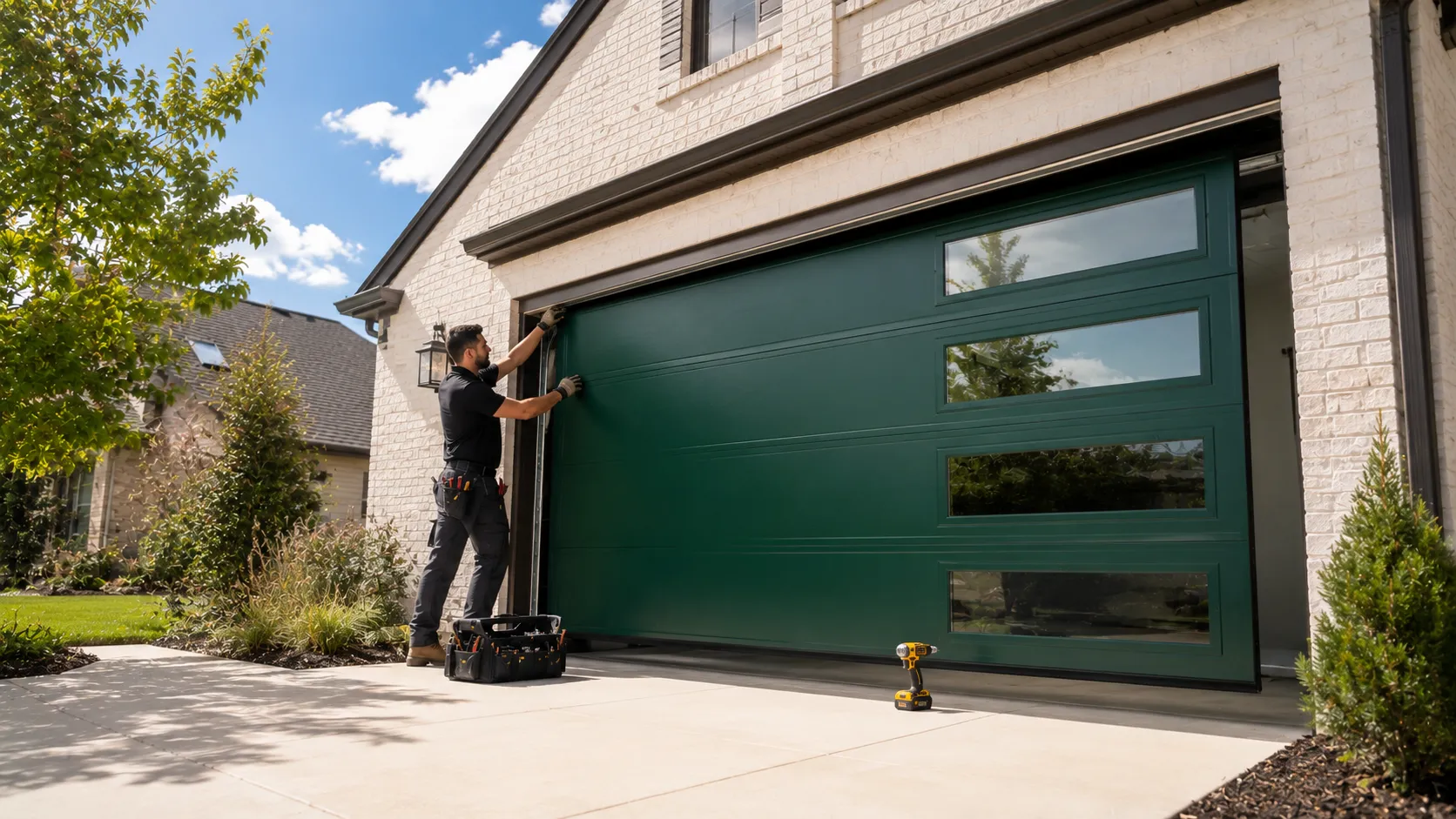
You can buy a generic panel online and bolt it into a lot of doors. What you usually can't do is match it. Doors from the 1960s and 70s came in panel heights, rib patterns, and colors that manufacturers stopped stocking decades ago, so a mismatched panel next to three original ones is common and it's obvious from the street.
The honest limitation here: if your door is old enough that the manufacturer no longer makes that panel profile, a single-panel swap isn't always possible at any price, DIY or professional.
Sometimes the only real fix is replacing the whole door, and a good repair call should tell you that up front instead of forcing a patch that won't sit flush.
If you do want to try it yourself, the parts that trip people up are the hinges and the track alignment - a panel that's slightly out of square binds the rollers and puts strain on the opener within a few weeks, not immediately. That delay is why a lot of DIY panel jobs look fine on day one and start grinding by spring.
The repair
The first step is figuring out whether the panel can be matched at all. On doors from the 1960s-70s stock common across this area, that means checking the manufacturer, the panel height, and whether the section is still in production or has to come from a limited stock of legacy profiles.
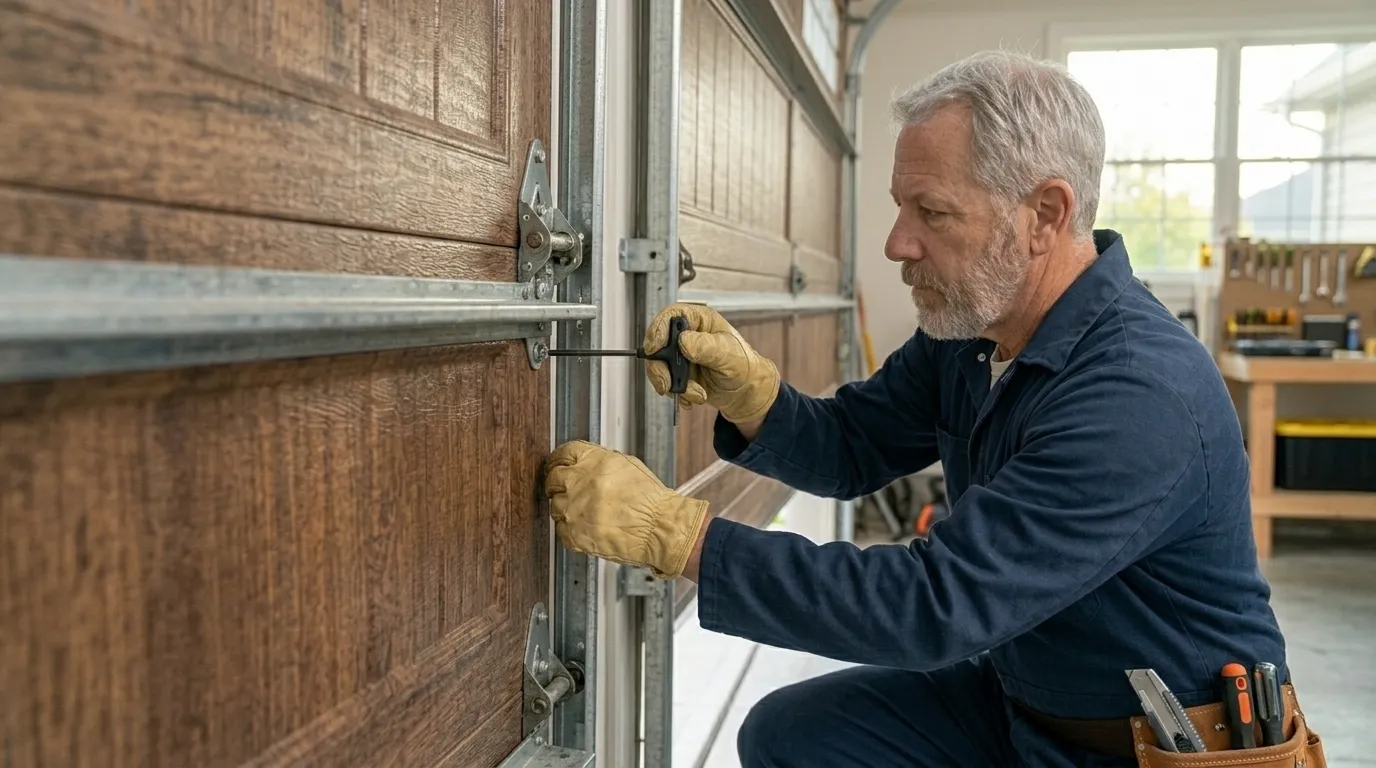
If it can be matched, the job is a straight swap: unbolt the hinges above and below the damaged section, pull the panel out of the tracks, set the new one in, and re-hang the hinges and rollers.
If it can't be matched, the conversation shifts to whether a full door replacement makes more sense than a mismatched patch that will bother you every time you pull in the driveway. That's a judgment call based on how many other panels are already showing wear, not just the one that's damaged.
Either way, panel work touches the hinges, the rollers riding in that section, and sometimes the end stiles, so a proper job checks all of that rather than just bolting in a new piece of steel and calling it done. Doors with steel that's rusted at the bottom corner from years of runoff usually need that corner addressed at the same time or the new panel rusts through in the same spot.
Warning signs
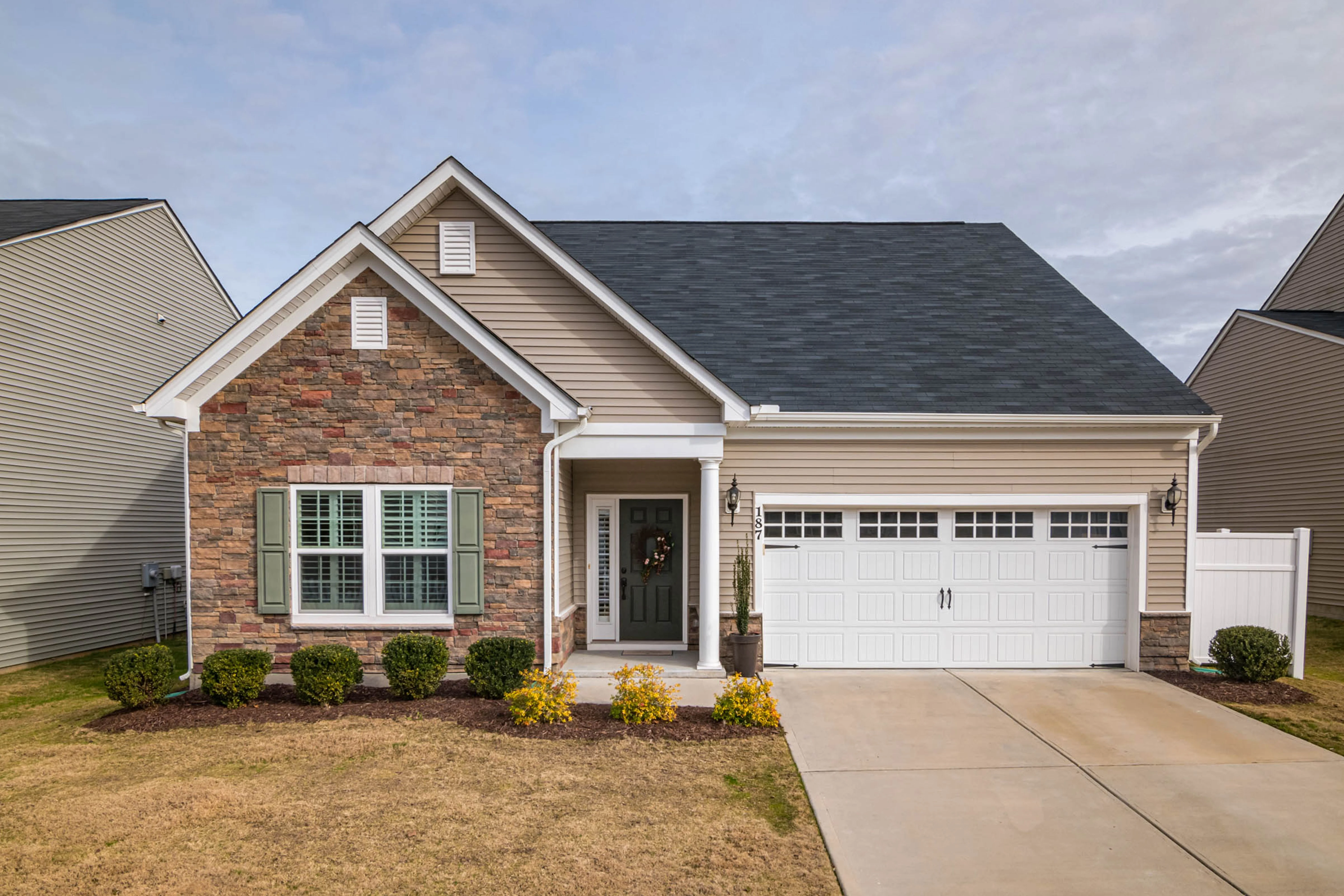
The most common complaint is a visible dent or a bowed-out section, usually low on the door where it takes the most abuse. Close behind that is rust bubbling up through the paint along a seam or at the bottom edge - once you see bubbling, the steel underneath is already thinner than it looks.
A less obvious sign is a door that's started binding partway through its travel, or an opener that strains and reverses on one section of track. That often means a panel has bowed just enough to bind against the roller, even before any dent is visible from outside.
Some owners notice daylight or a draft along one seam that wasn't there before - a sign the panel has separated slightly from its neighbor, which on an older steel door usually means the seam has fatigued from repeated freeze-thaw flexing rather than one single impact.
Questions
Sometimes. It depends on whether the manufacturer still makes that panel height and rib profile. A lot of doors built in the 1960s and 70s used profiles that are long out of production, so we check availability before quoting anything - a full door swap can end up being the more honest answer.
Unheated garages get condensation on the inside face of the door, and over decades that moisture works on the steel from the back where you can't see it until it bubbles through the paint on the front. It's a slow process tied to age, not a sign of a recent problem.
It depends on the dent. A shallow cosmetic dent usually doesn't affect operation. A dent that bows the panel outward can bind against the roller or throw off the track alignment, which puts extra load on the opener and shows up as grinding or reversing.
If the rest of the panels are in similar shape - same age, similar rust or fading - replacing just one section often looks mismatched and doesn't solve the underlying age problem. We'll tell you straight if a full door makes more sense than patching one section.
Explore more
Ready when you are
Chicopee Garage Door Pros repairs and installs garage doors, springs and openers in Chicopee, MA and the surrounding area.