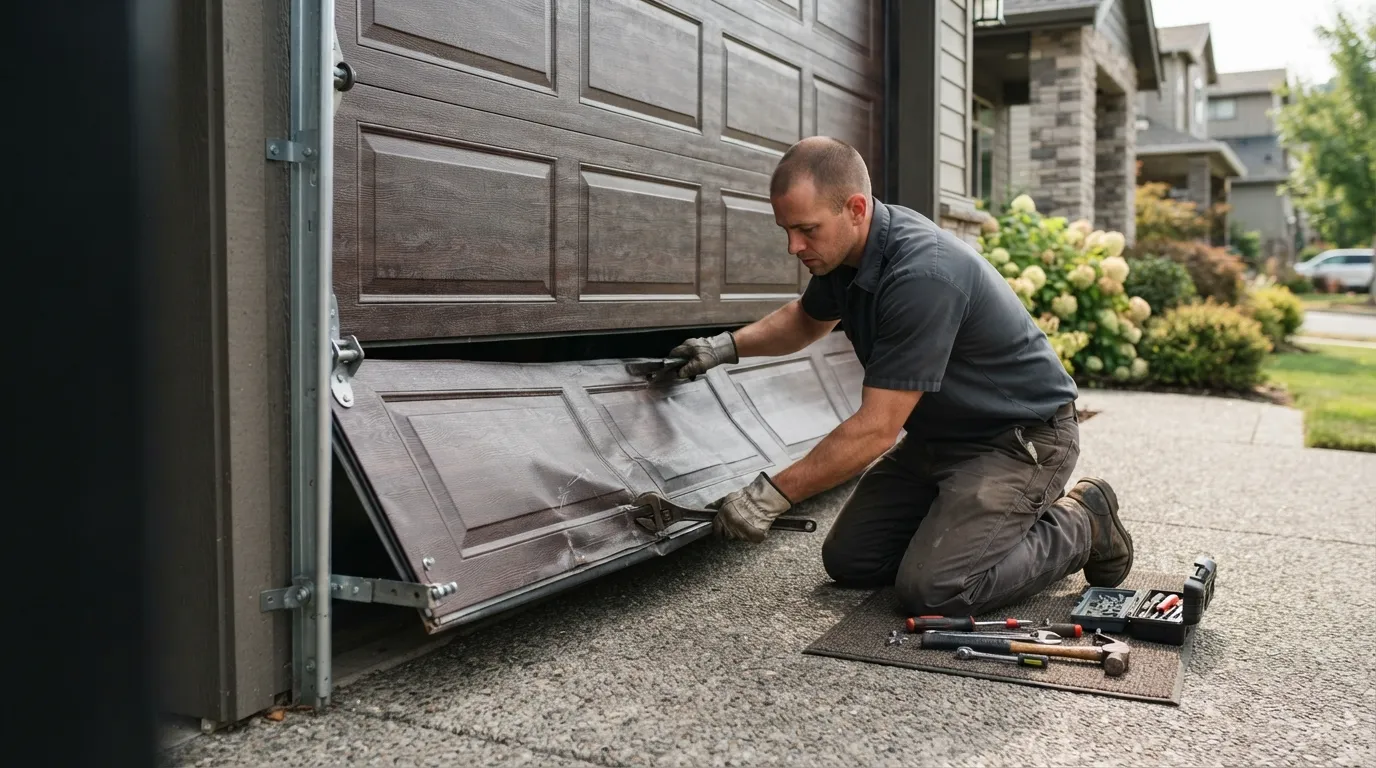
Northampton's housing runs older than the broader service area average - the typical house here dates to around 1956, ahead of the 1965 median across the wider Chicopee service territory, and that gap matters for doors. A door installed or replaced in the 1960s or 70s, which is common stock across the 33 communities we track, has had six decades of freeze-thaw cycles to work on its seams. In a climate this cold, water gets into a hairline seam on a steel panel, freezes overnight, and widens the split by spring - that's the mechanism behind most of the panel cracks we see on houses from this era, not impact damage.
Wood-core panels from the same period fail differently: they absorb moisture at the bottom rail, swell, and eventually bow the whole section so it won't sit flat in the track. Both failure types are common enough here that we don't treat a cracked or bowed panel on a Northampton door as unusual - it's closer to what you'd expect from a house this age in this climate.