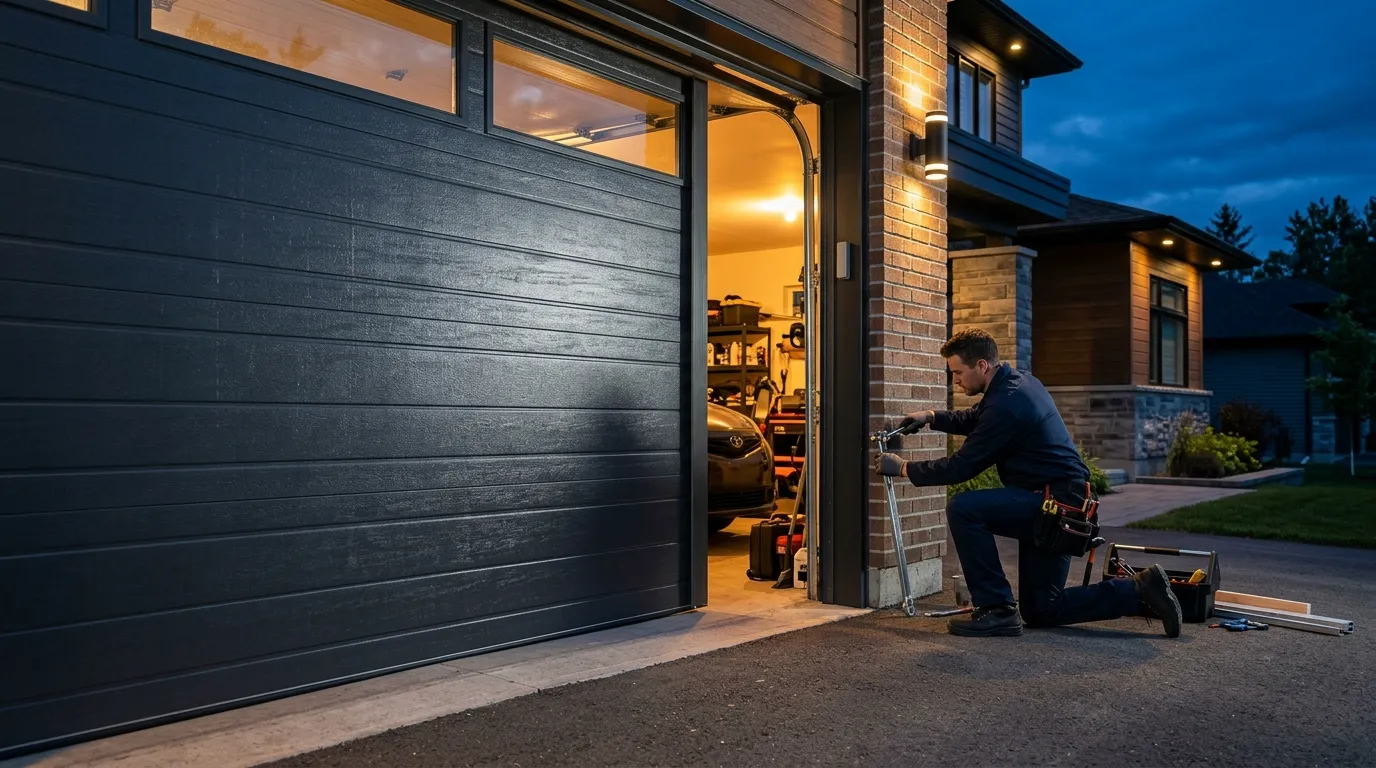
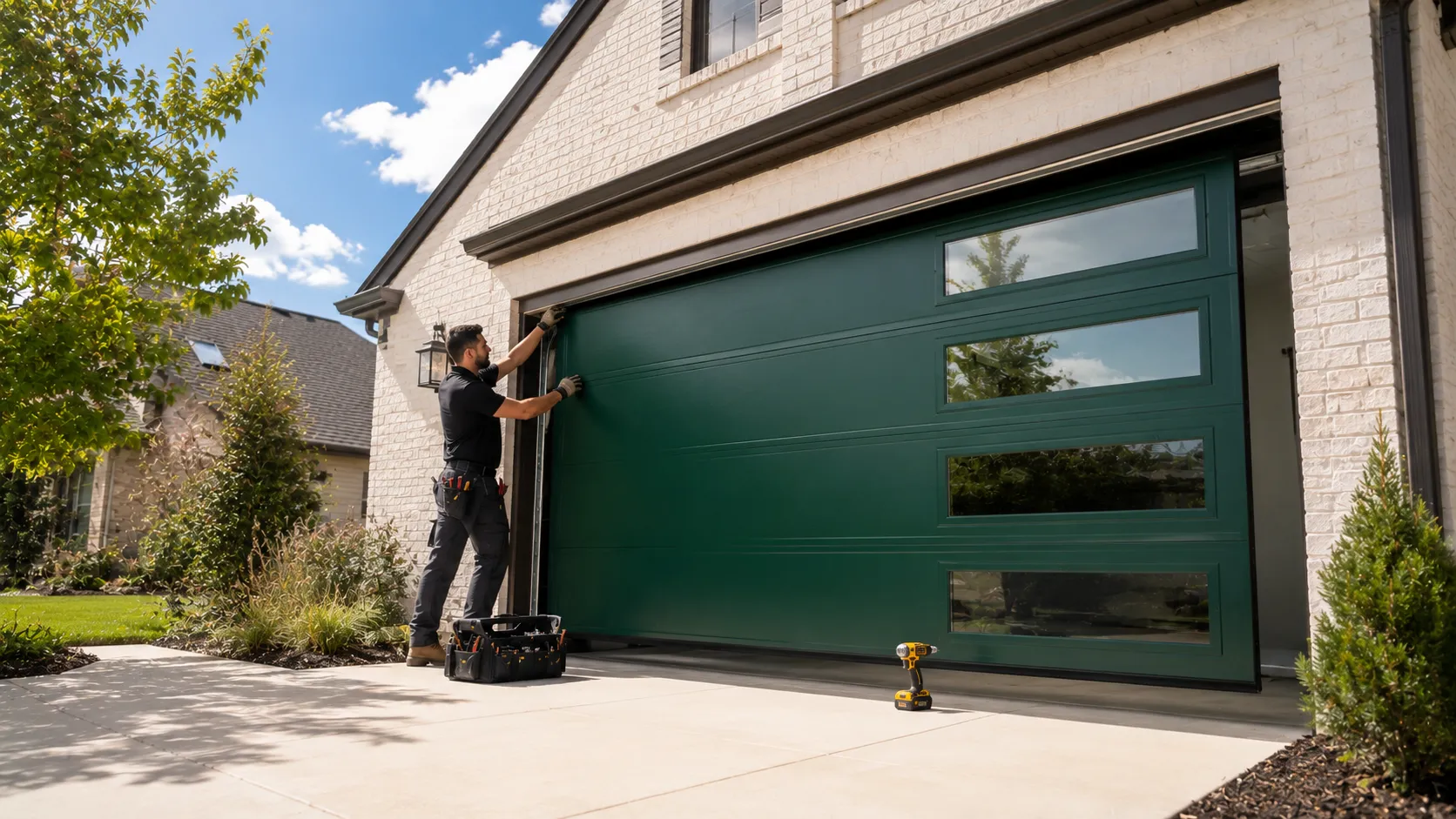
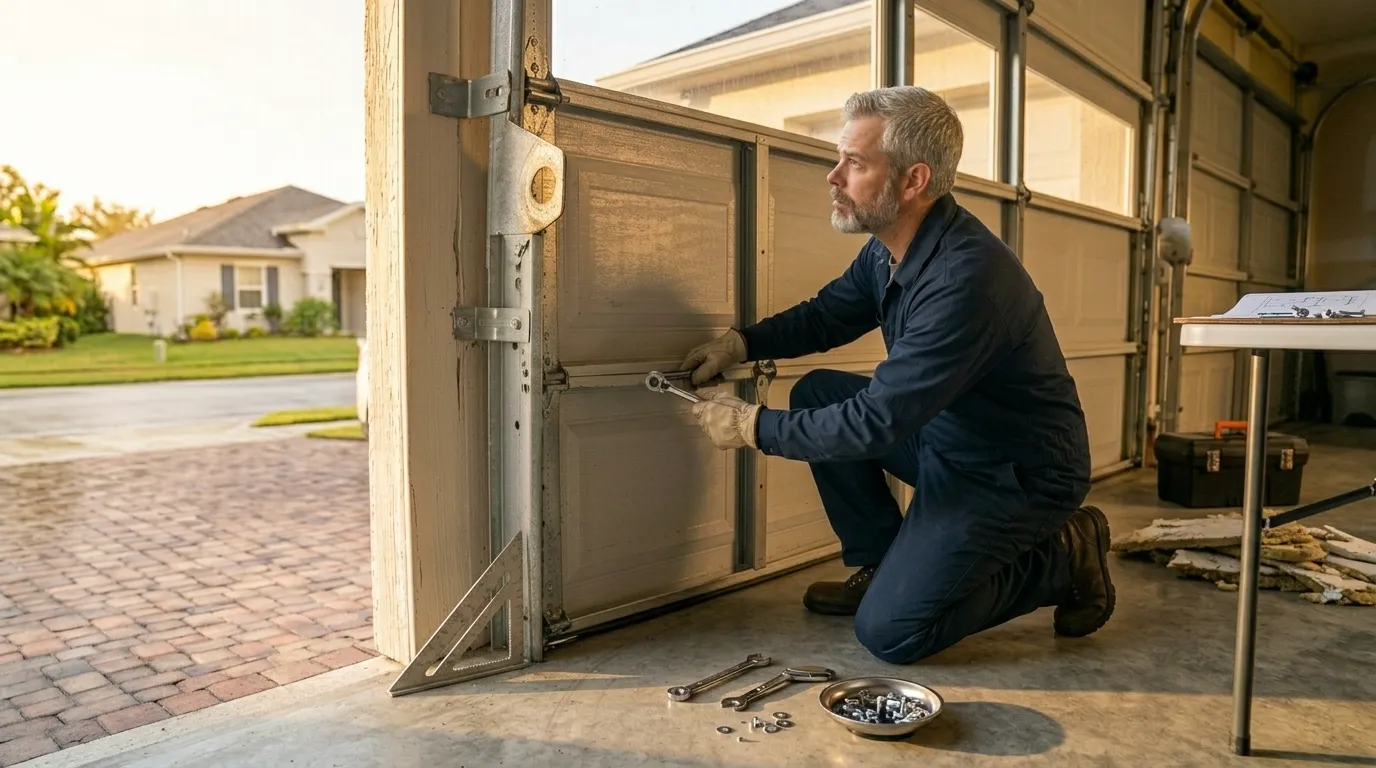
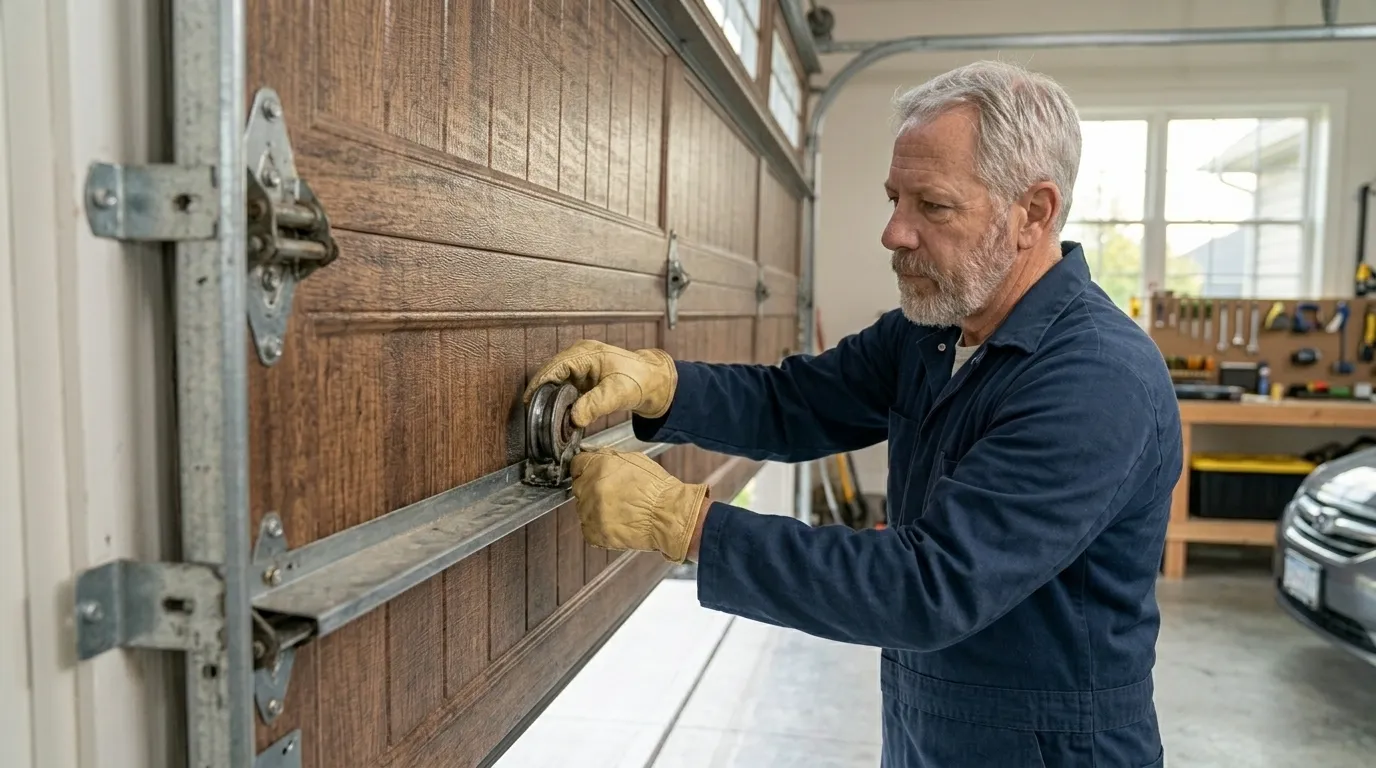
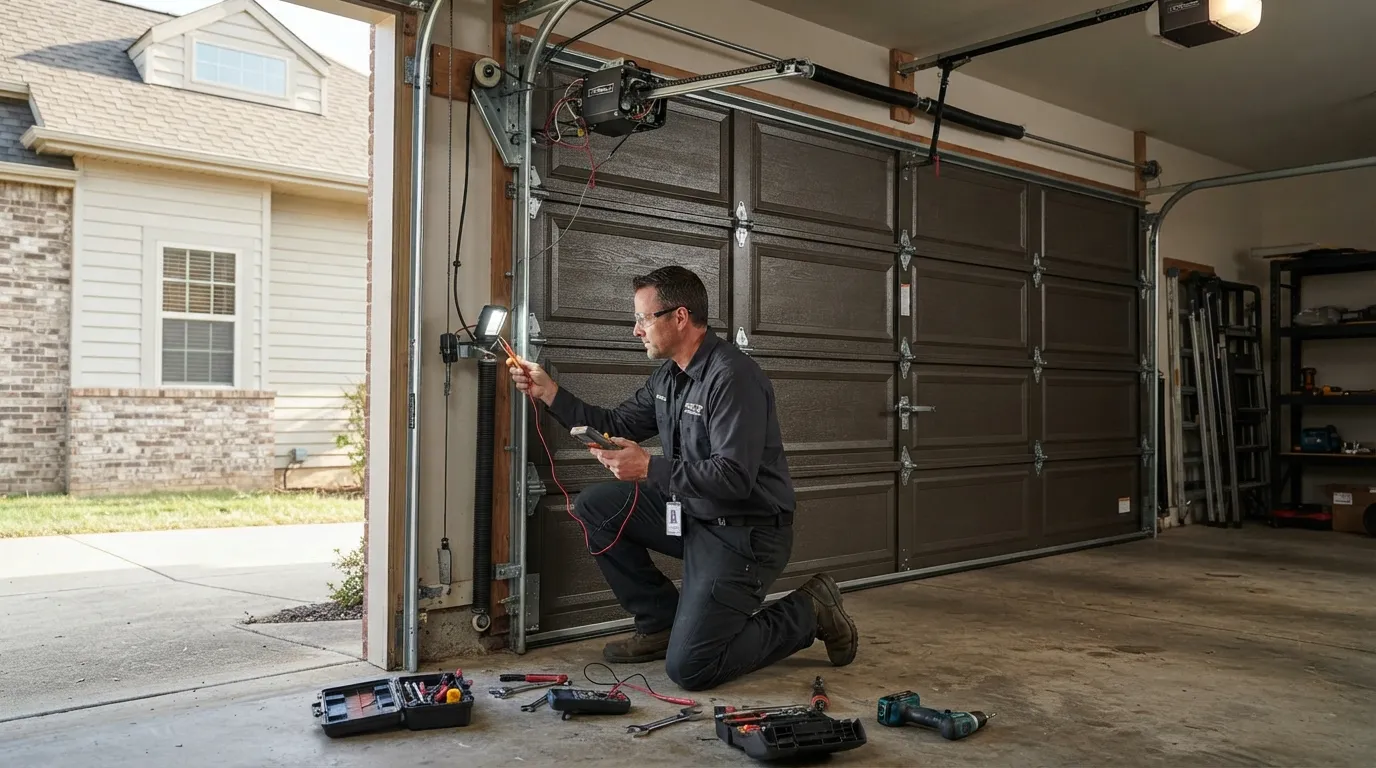
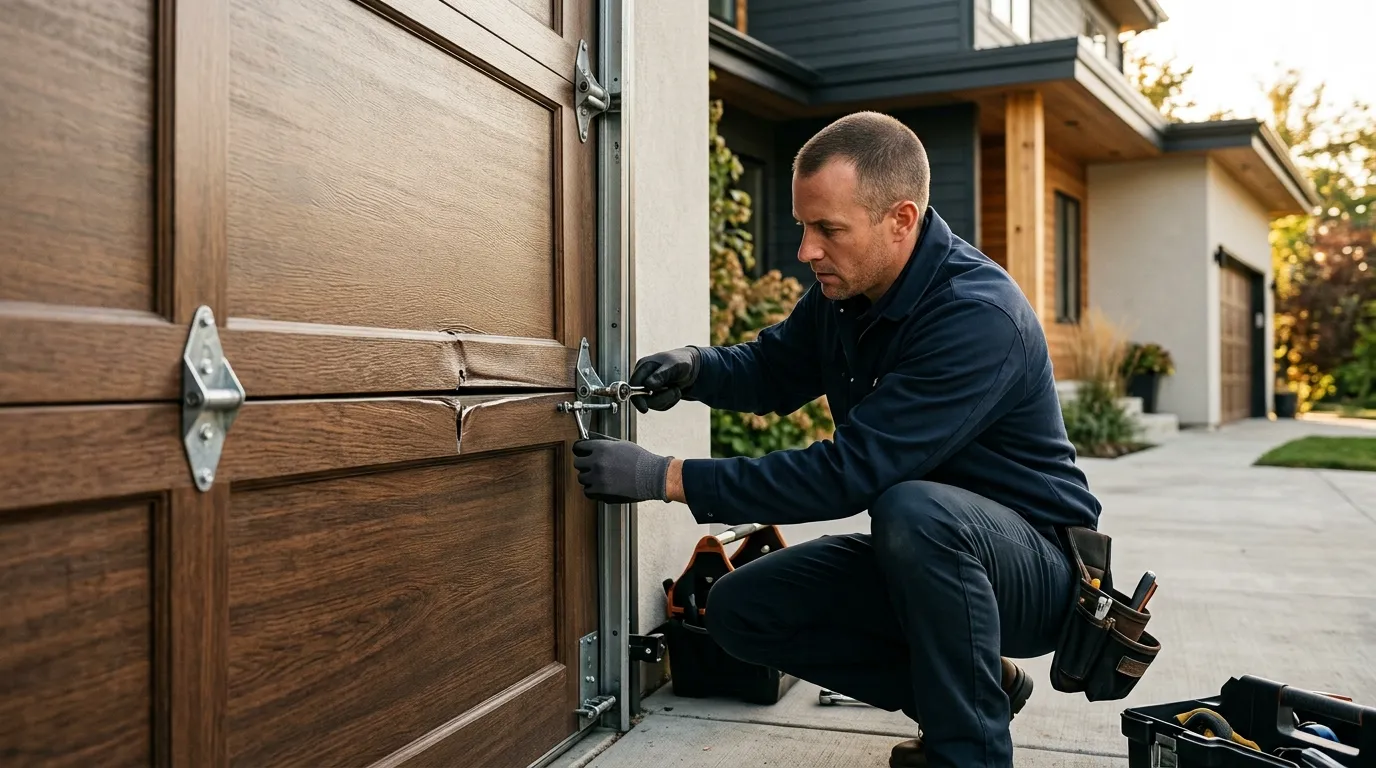
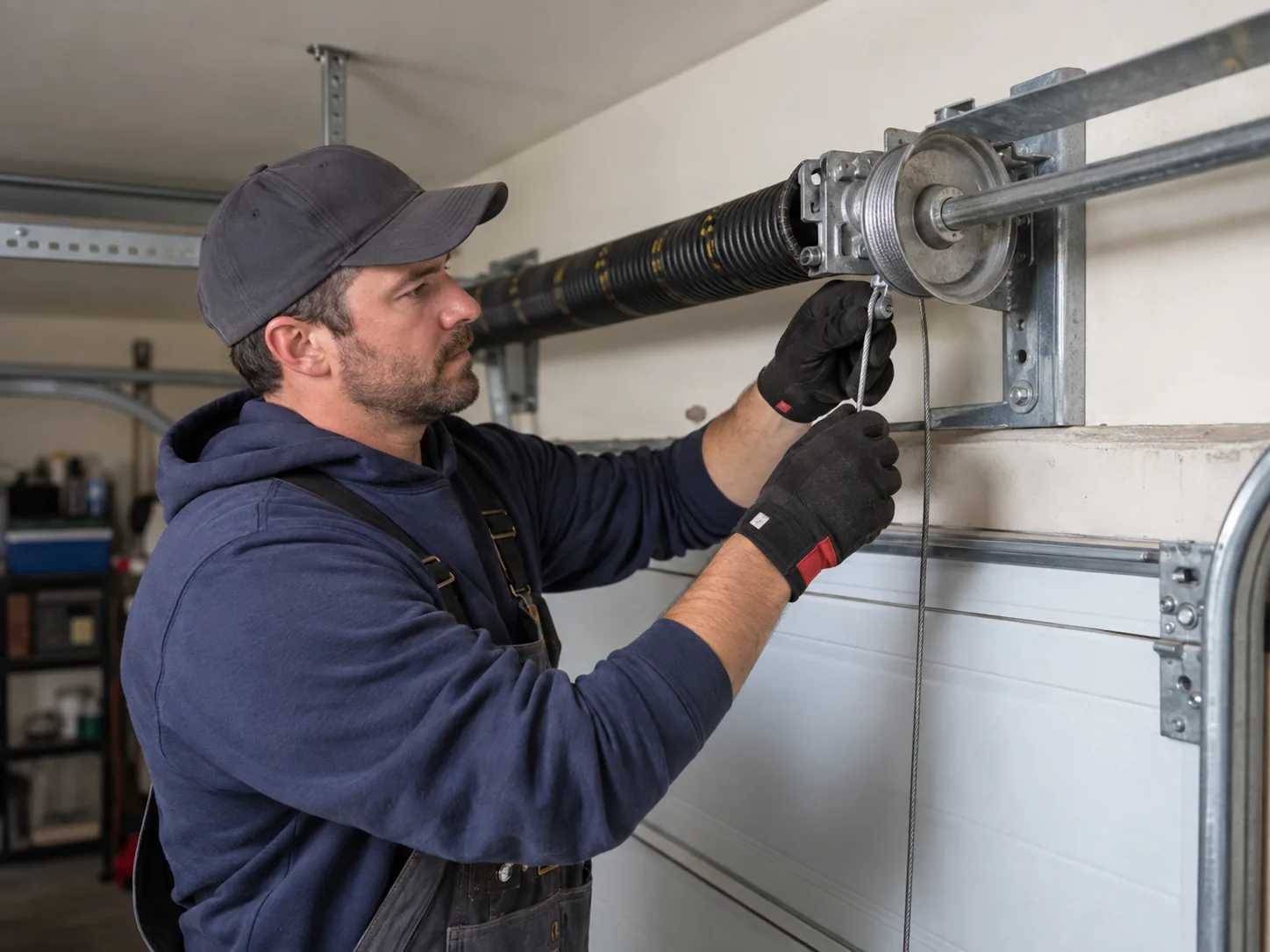
Install starts with the opening itself, not the door in the box. On a house from the early 1960s, the jamb and header framing were built for the panel style of that era, so before anything new goes in we check the header depth, the track clearance, and whether the opening is still square - decades of frost heave do that slowly, and South Hadley sits in a climate band where frost heave is a real, recurring load on a foundation, not an occasional event. If the framing has shifted, we shim and re-square it before the new track goes up; skipping that step is how a brand-new door ends up binding within a year. For an insulated replacement, we also check that the wall can take the added weight of a two-layer steel door with a polyurethane core - heavier than what most of these houses started with - and size the torsion spring to match, not just swap in whatever the old spring was rated for. That's the part that gets rushed on a quick job and shows up as a hard-to-lift door six months later.