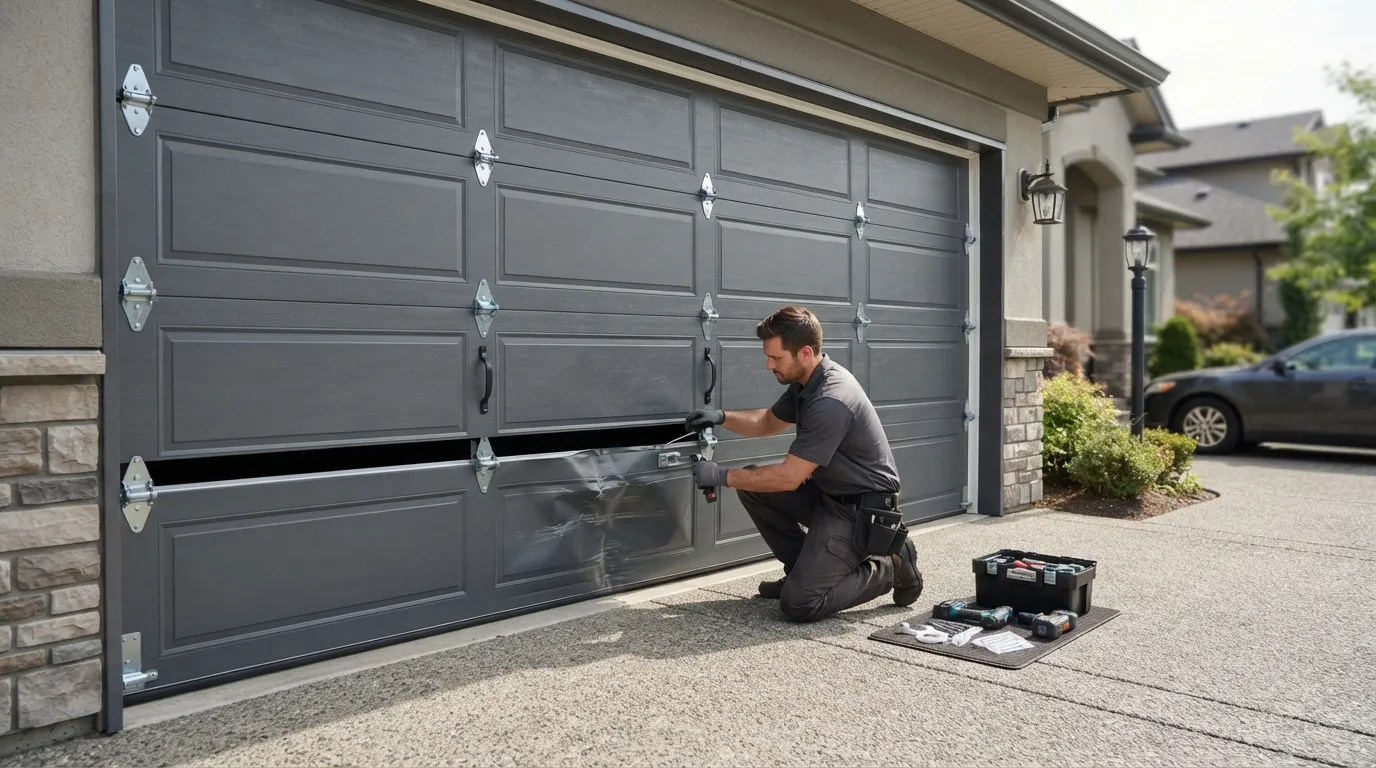
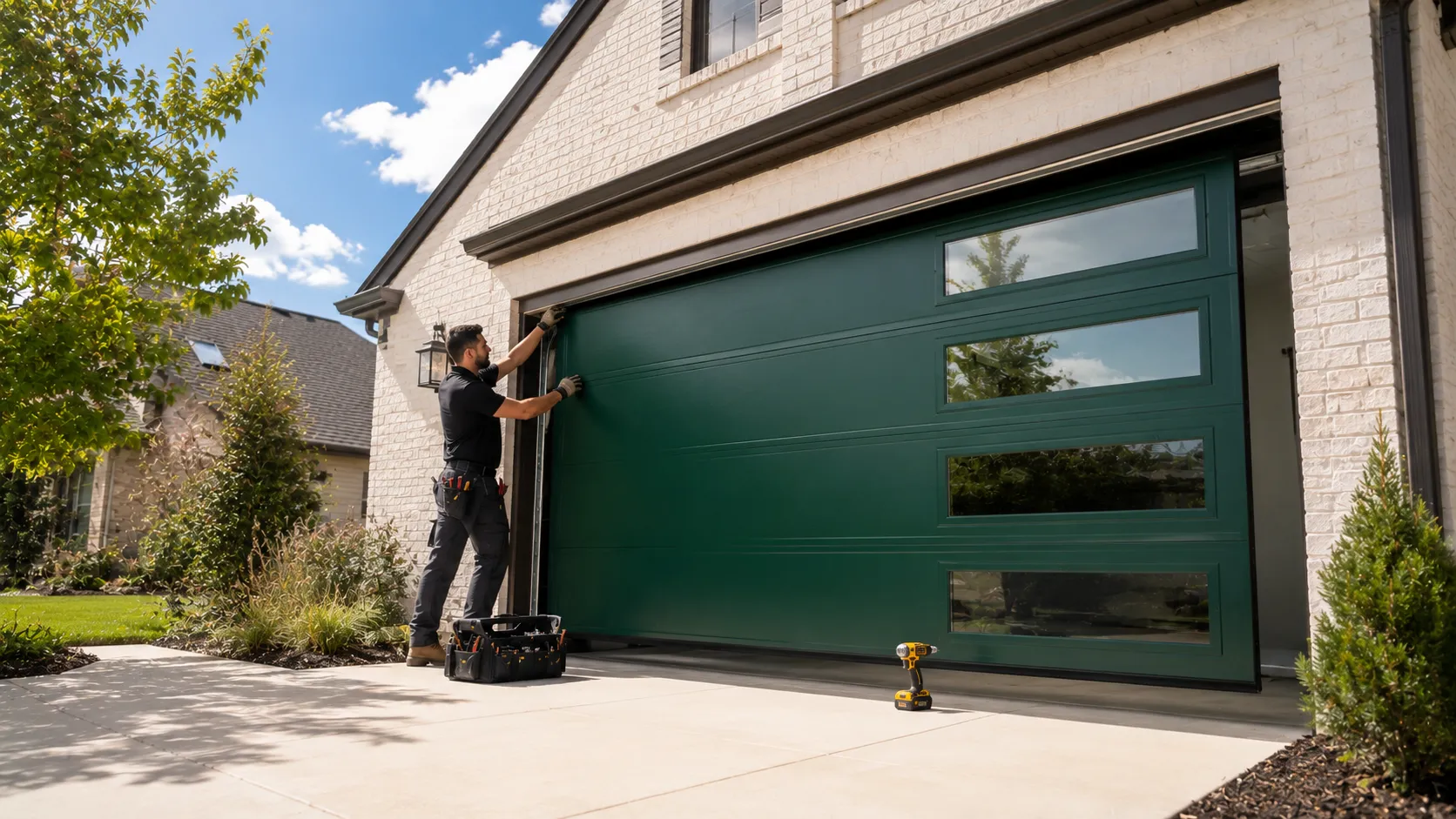
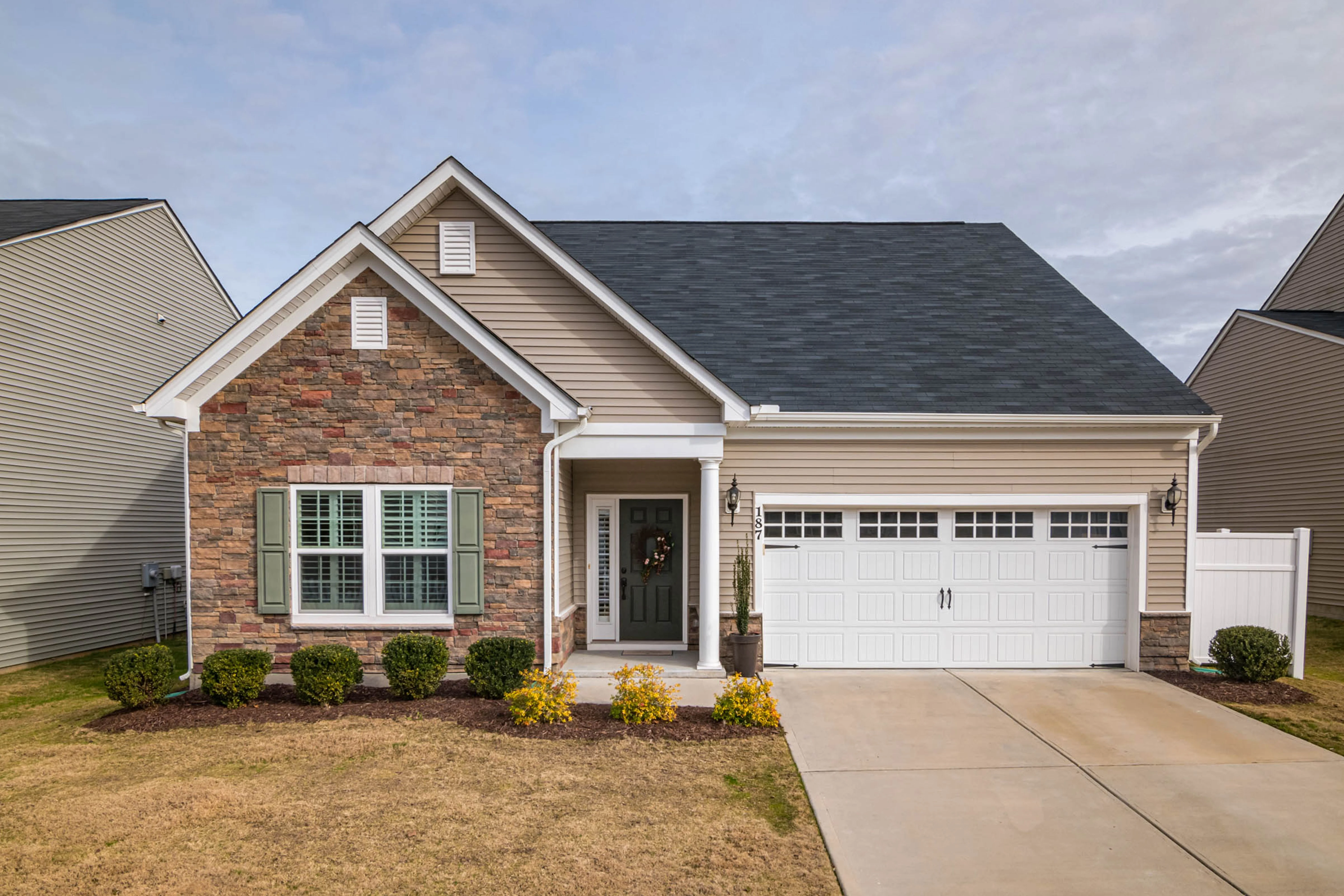
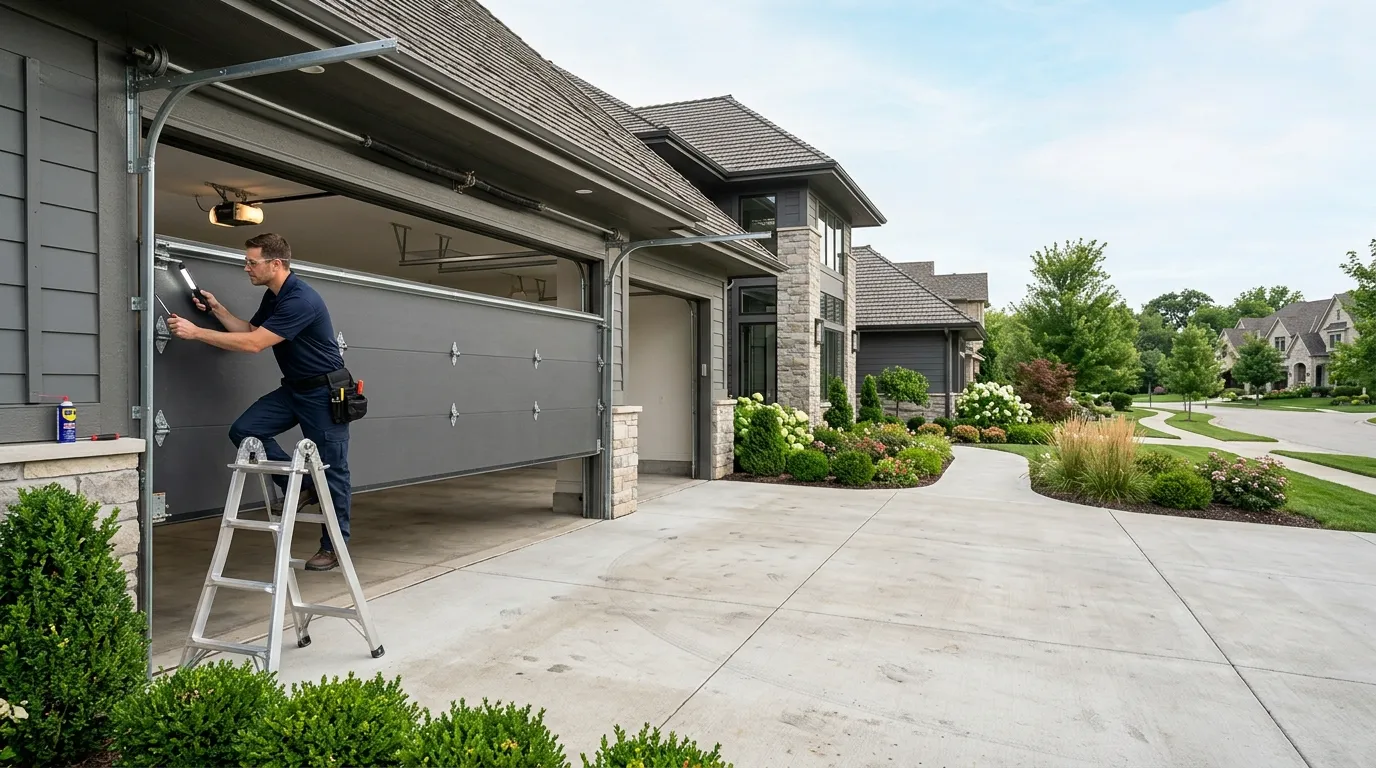
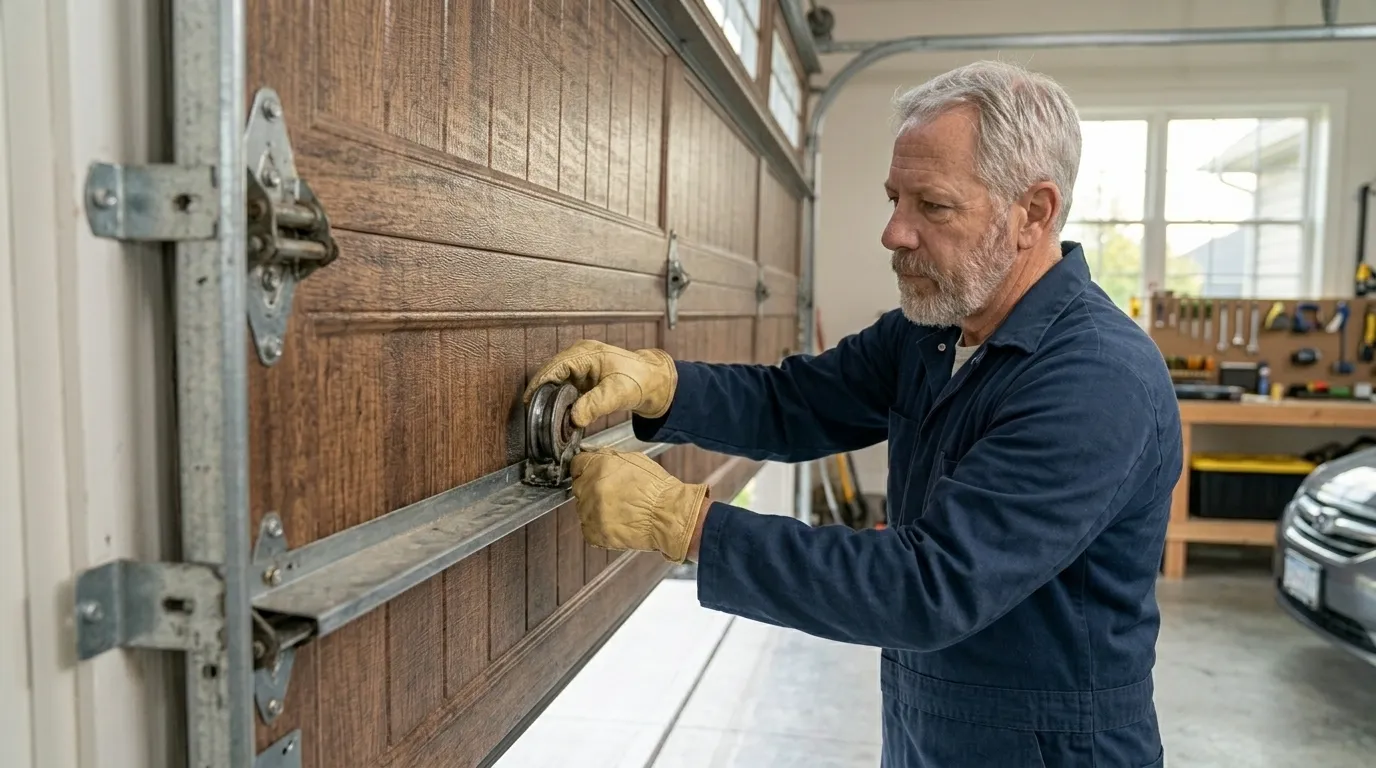
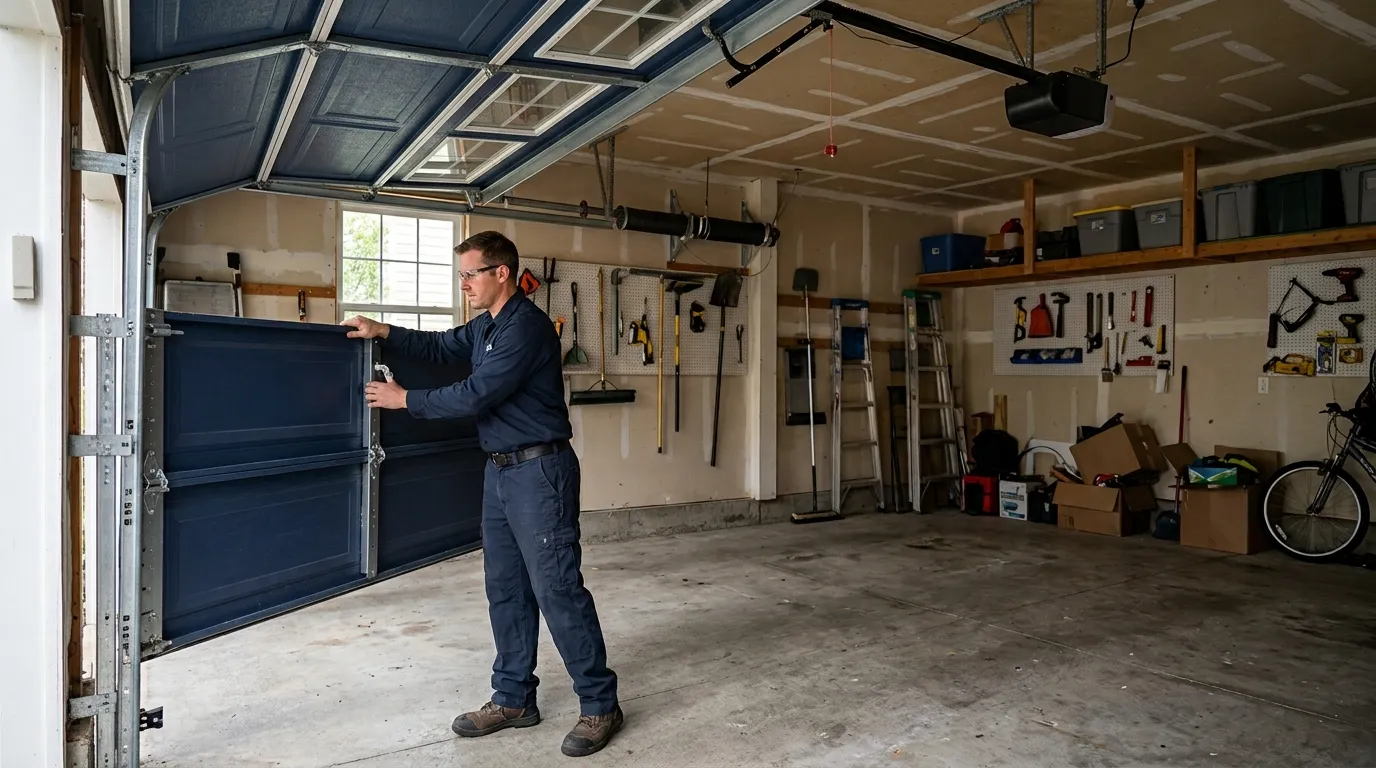
Panel damage in Southwick tends to trace back to two things: the age of the hardware and the weather it's been sitting in. A door built around 1981 has had over forty winters of freeze-thaw cycling on its track and fasteners, and in a climate zone rated cold and severe, that cycling loosens hinges and lets a panel flex more than it should when something bumps it - a car mirror, a bike, a sports ball. Once a panel is already flexing slightly on worn hardware, a dent that would've stayed cosmetic on a newer door instead cracks or buckles a full section.
We also see damage tied to insulation upgrades homeowners did themselves over the years. Steel doors from this era were often built with a lighter-gauge panel than what's standard now, and if a section was patched or reinforced at some point with mismatched material, it doesn't flex the same way as the rest of the door - that uneven flex is where the next crack starts.