Westfield, Chicopee

Garage Door Repair for Westfield's 1960s Housing Stock

Torsion springs and old rollers give out first on Westfield's 1960s-era doors. Chicopee Garage Door Pros travels 10 miles to fix them right.

Garage Door Repair for Westfield's 1960s Housing Stock in Chicopee
Same-day service in most cases
Serving Chicopee, MABackground-checked techsHonest, upfront pricingFast local response

Local causes

Why It Happens Here

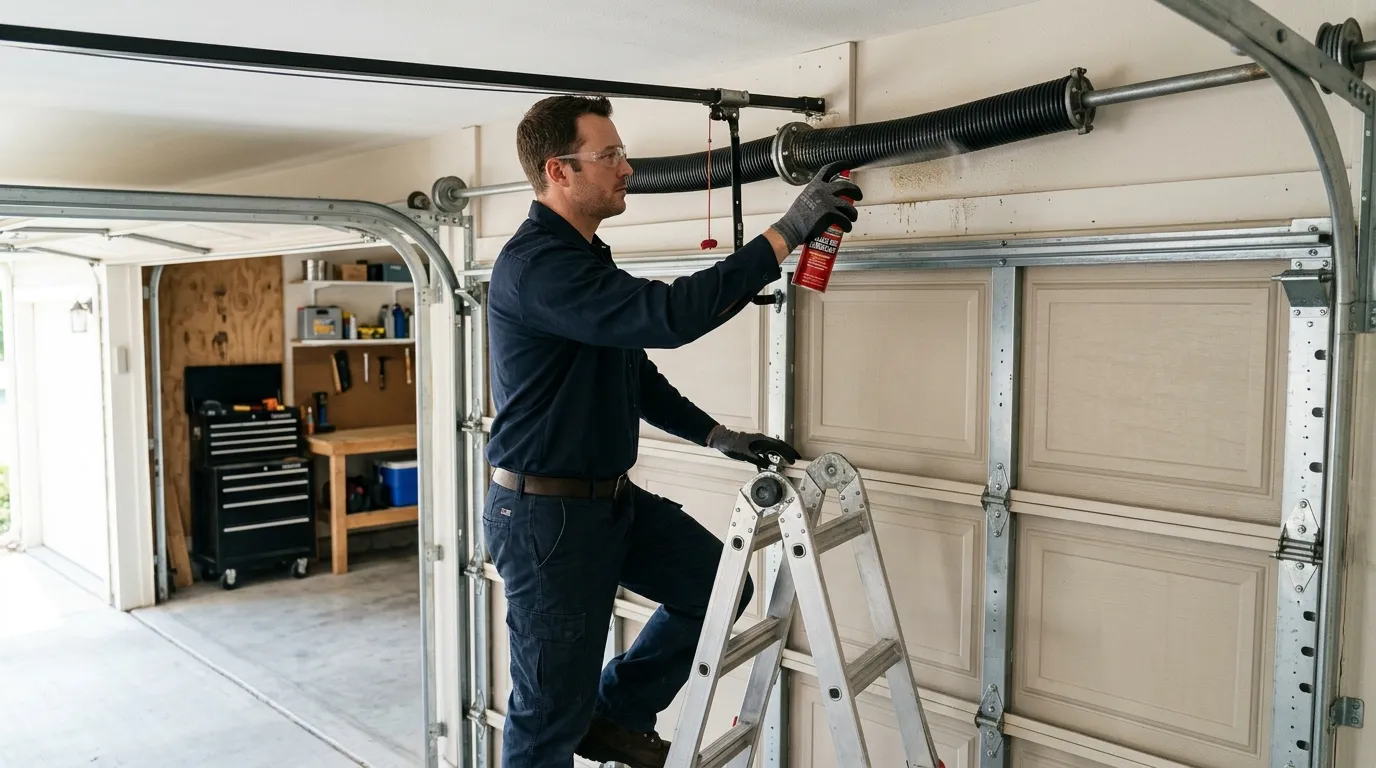
The first thing that goes on a Westfield garage door isn't the opener, it's the torsion spring. That's true across this whole corner of the state, but here it shows up on a fairly narrow band of houses, because so much of Westfield's housing went up in a tight window. The median home in this area was built in 1965, which puts a lot of garages on original or first-replacement hardware that's now pushing sixty years old.

Springs from that era were sized for lighter, thinner steel doors than what's sold today. Homeowners who've swapped in a heavier insulated door without upsizing the spring end up with a door that slams down instead of settling, or an opener straining on every lift. We see this pattern often enough in the 1965-median housing stock that it's the first thing we check before touching anything else.

Cold makes it worse. This area sits in a cold-severe climate band, and steel torsion springs lose flex as temperatures drop. A spring that's been quietly weakening all summer will often pick the coldest morning of the year to finally let go, usually with a bang loud enough to bring you out in slippers.

Why It Happens Here

Watch-outs

What Can Go Wrong

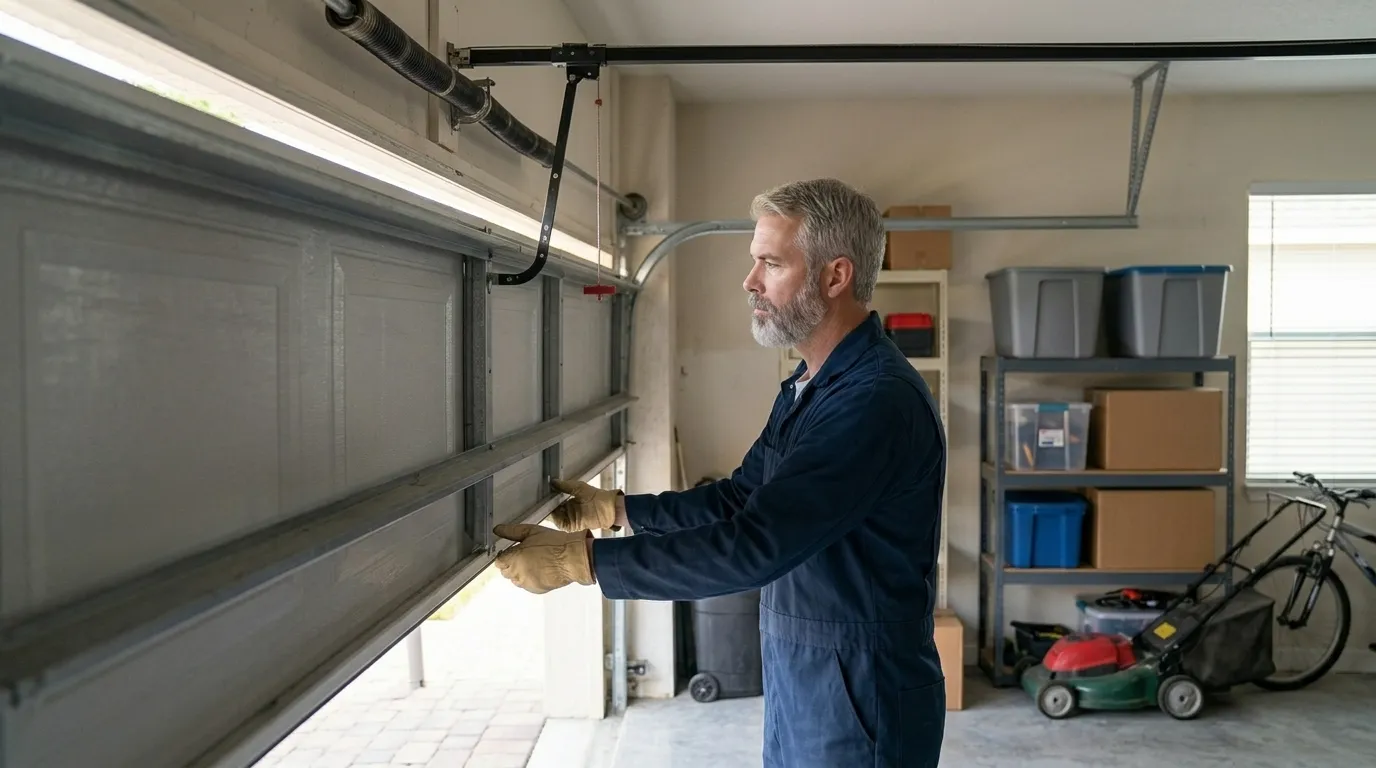
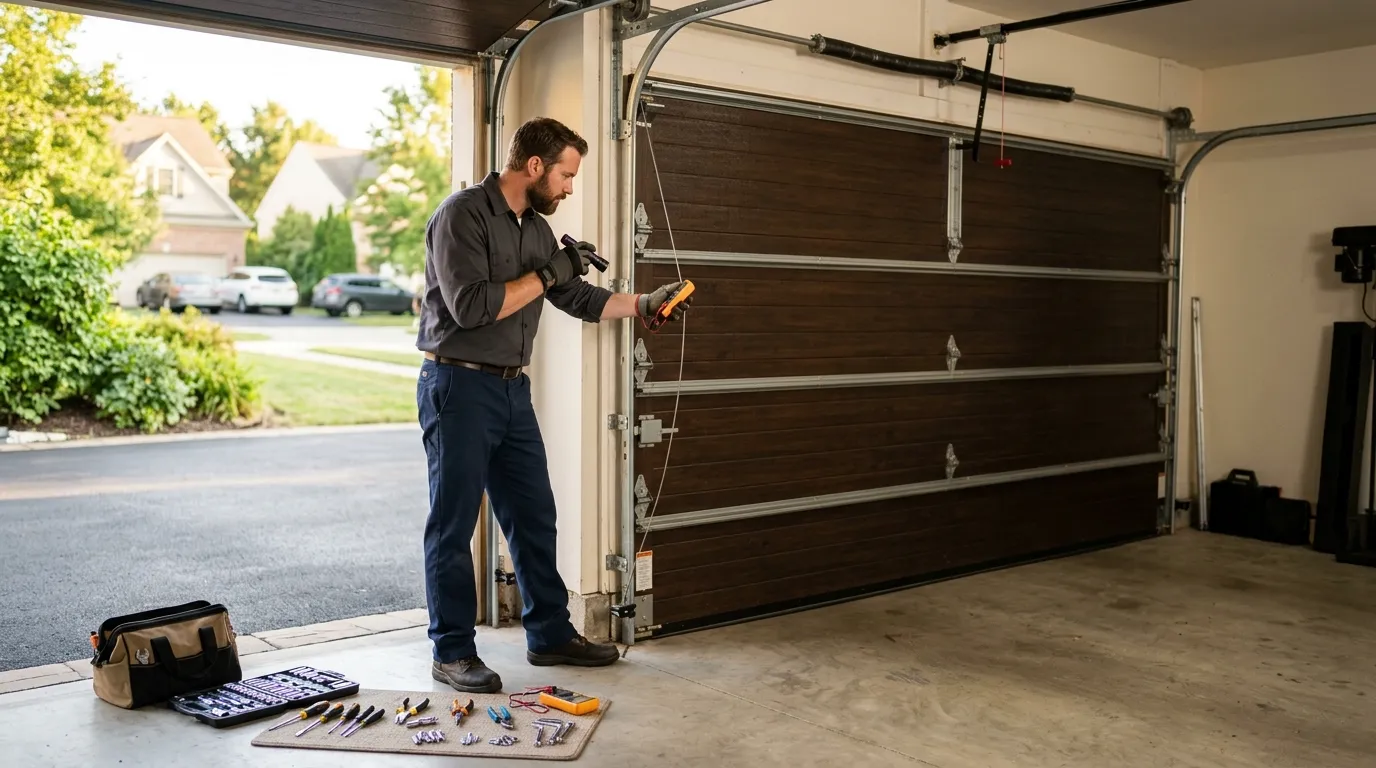
On a door this age, the failure points cluster in a few places. Torsion springs crack or lose tension and the door gets heavy to lift by hand.

Cable fraying and drum wear

Lift cables fray where they wrap the drum, especially on doors that have seen a few spring replacements over the decades without a full hardware check. Rollers, if they're still steel and not nylon, seize in their tracks once cold sets in and the door starts binding on one side.

Aged opener gear-drive conditions

Openers on 1960s-era garages are almost never original - the gear-drive units from the 80s and 90s that replaced hand-crank doors are now aging out themselves, and stripped gears or a slipping drive belt are common. On double-wide doors, an unbalanced spring set puts uneven strain on the track, which shows up as a door that walks sideways as it travels.

Repair versus replacement economics

One honest note: if the door itself has significant rot or the track is bent beyond a clean adjustment, replacement usually costs less over time than another round of patch repairs. We'll tell you when that line has been crossed instead of billing you for a fix that won't hold.

Warning signs

How It Shows Up

Most calls start the same way: the door won't lift, or it lifts about a foot and stalls.

One-sided roller failure

That's almost always a spring gone. A door that's noisy on one side but smooth on the other points to a bad roller or cable on that track. If the opener runs but the door doesn't move, look at the drive gear or belt before assuming the motor's dead.

Limit switch reversal issue

A door that reverses right after touching the floor is a safety-sensor or limit-switch issue, not a spring problem - different fix, different cost. And a door that's suddenly harder to lift by hand than it was last winter is worth a call before it fails completely; that's usually a spring losing tension gradually rather than snapping outright.

How to Book

Booking

How to Book

Chicopee Garage Door Pros covers Westfield from our base in Chicopee, about 10 miles out. Call to describe what the door is doing - whether it's stuck, slow, noisy, or dead - and we'll get a truck routed out. We don't keep a branch in Westfield, so the drive time is part of the plan, not a surprise.

See our [Westfield area page](/areas/area/westfield/) for more on how we cover this town, or check the [Chicopee garage door repair page](/garage-door-repair-chicopee-ma) for the full range of services we run out of our home base.

Doing It Yourself

DIY or pro

Doing It Yourself

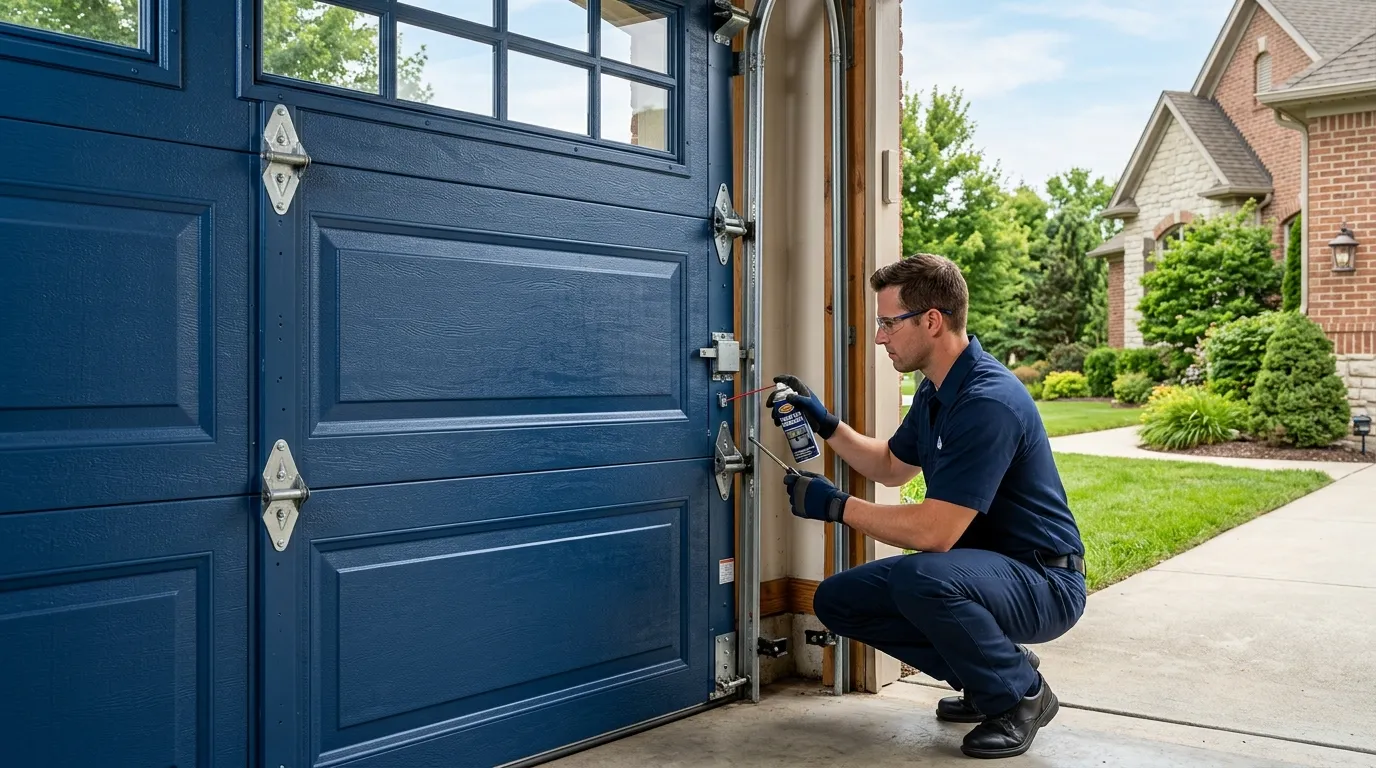
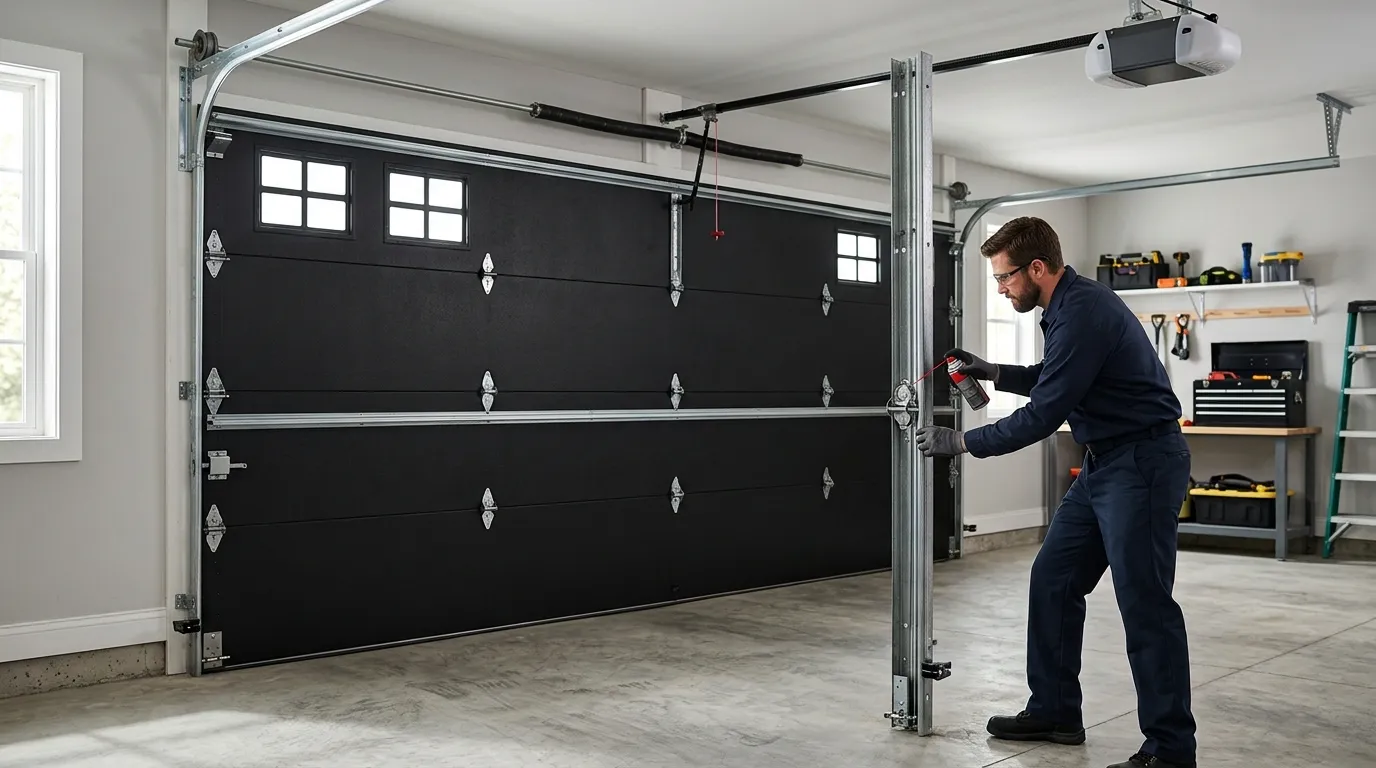
There's real DIY room here, and there's a hard line. Fine to do yourself: wipe down and lubricate the tracks and rollers with a garage-door-specific lubricant twice a year, tighten loose hinge bolts, check that the weatherstripping at the bottom hasn't cracked in the cold, and test the auto-reverse by setting a piece of wood in the door's path.

Not fine to do yourself: touching the torsion spring. These are wound under enough tension to break bones, and on a door this old the spring may already be more fatigued than it looks. If the door feels heavy, sounds off, or won't stay up on its own, that's a call, not a project. We'd rather talk you out of a spring job over the phone than patch you up after one goes wrong.

Questions

Common questions

Why does my garage door feel heavier in the winter?

Cold steel loses some of its flex, and torsion springs on older Westfield-area doors - many original to houses built around 1965 - are already working near the end of their service life. The combination means a door that lifted fine in August can feel noticeably heavier by January, right before the spring finally gives out.

Do you have a location in Westfield?

No. We're based in Chicopee, about 10 miles from Westfield, and we drive out for calls rather than keeping a branch or depot in town. That distance is built into how we schedule, so tell us up front when you call.

Is it worth repairing a door this old or should I replace it?

Depends on the door. If the panels and track are sound and it's just a spring, cable, or roller, repair is the cheaper route. If the door itself has rot, rust-through, or a track that's been bent and re-bent, replacement usually holds up better and costs less over the next few years.

Ready when you are

Need a garage door sorted in Chicopee?

Chicopee Garage Door Pros repairs and installs garage doors, springs and openers in Chicopee, MA and the surrounding area.

CallGet a quote