
Guide
Garage Door Repair in Chicopee, Built for 1960s Housing Stock
Chicopee homes mostly date from the 1960s and 70s, with hardware sized for a colder climate zone. See what that means for repair and replacement costs.
Local detail
Season by Season
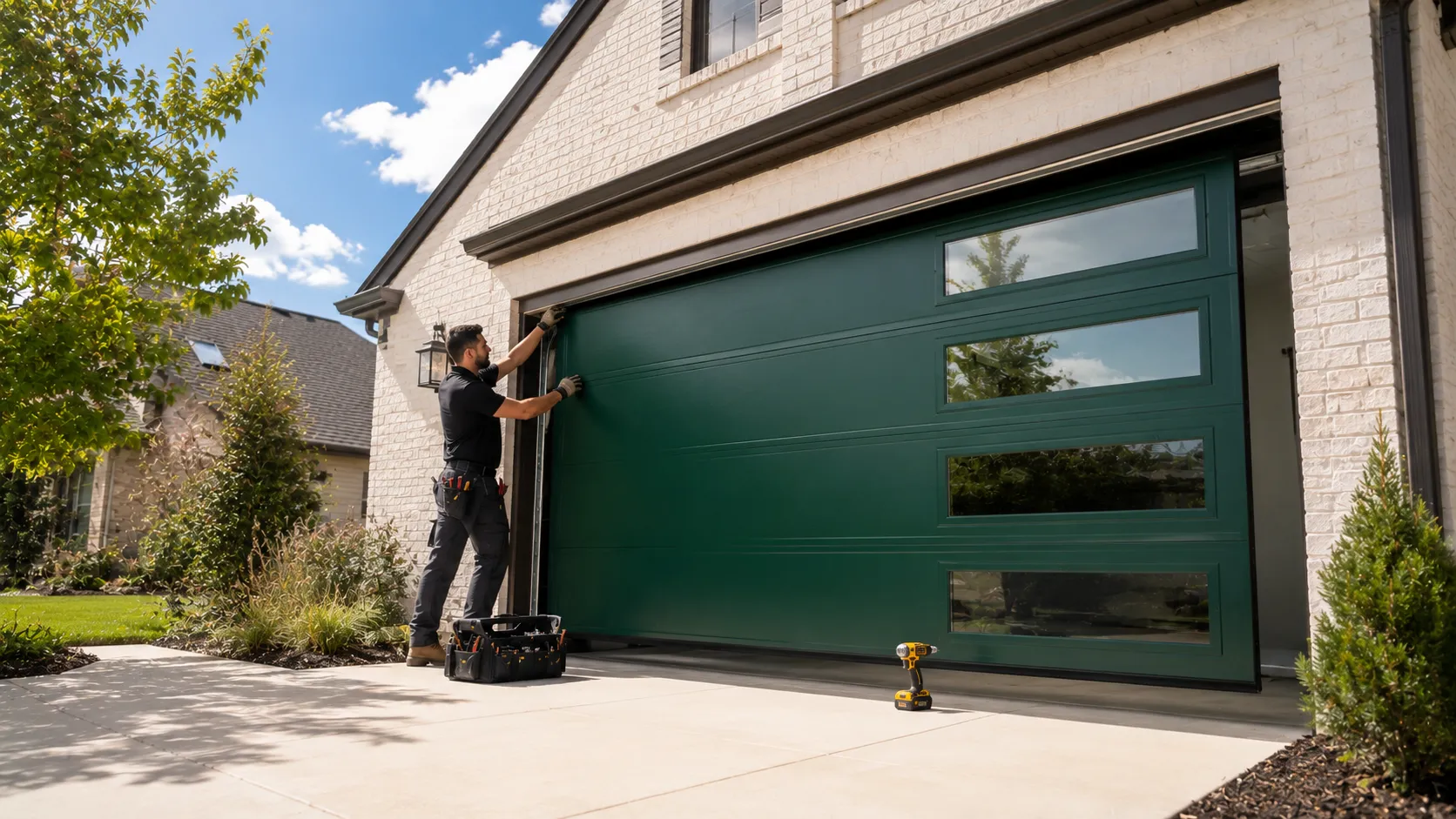
Chicopee sits in a COLD severe climate band, and that matters more for a garage door than most homeowners think. Steel contracts in low temperatures, and a torsion spring that's been winding and unwinding since the Johnson administration doesn't handle that contraction the way a new one does. You'll see it most in the coldest stretch of winter: a door that binds halfway up, a spring that lets go on the first cold snap after a mild week, or a track that's pulled a hair out of alignment because the slab underneath it heaved.
Spring and fall bring their own trouble. Freeze-thaw cycles work on the concrete footing under the track brackets, and on older homes that footing was never poured to the tolerances we'd use today. Summer is the easy season here - it's really the only stretch where a door with worn rollers or a slightly out-of-square track won't complain. If you're going to do preventive work, do it in September, before the cold sets the metal fatigue in for another winter. Waiting until the door won't open in January costs more, both in dollars and in how long you wait for parts.
The area
What Local Conditions Do
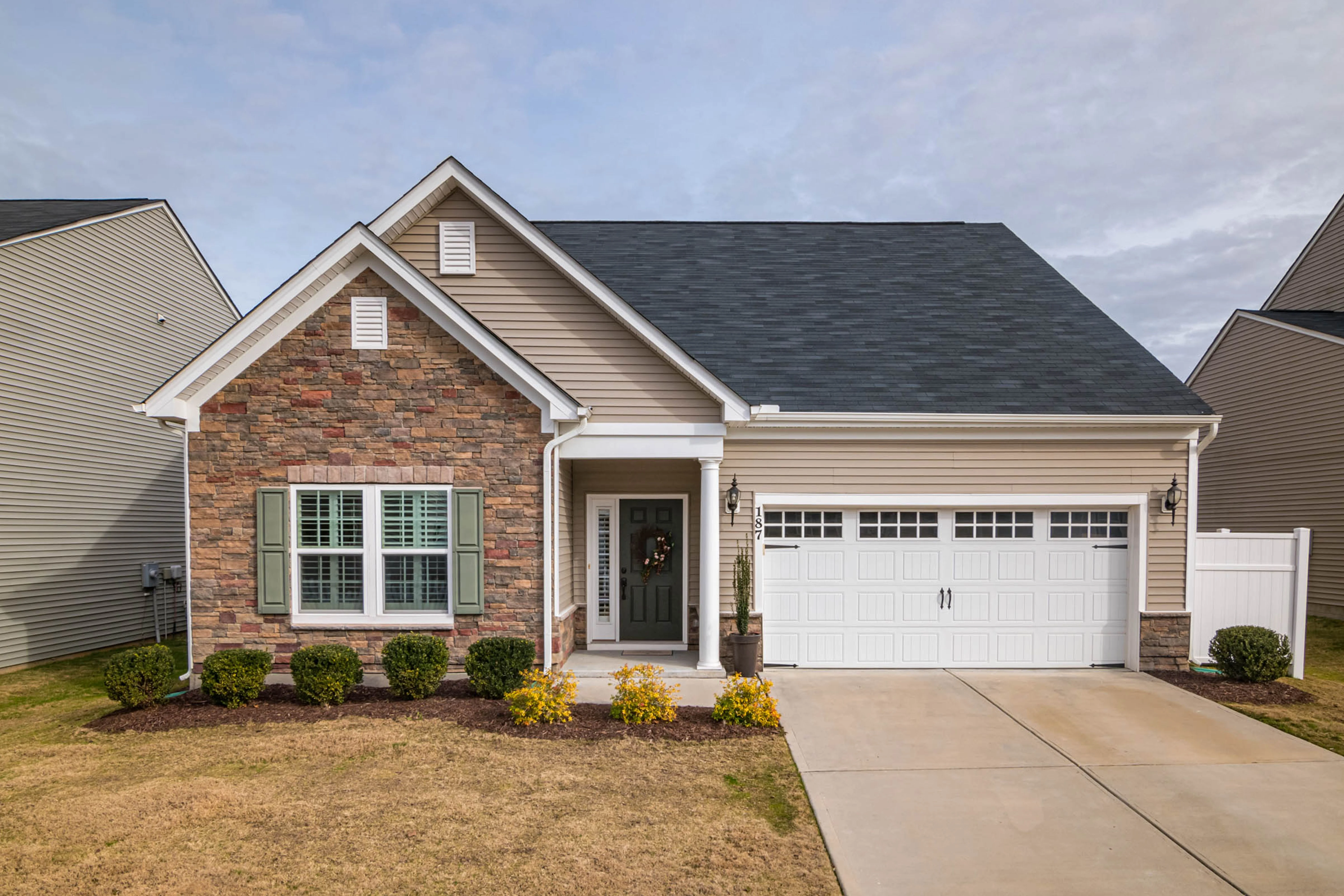
The housing stock through this area was mostly built between 1938 and 1989, with the median landing around 1965, and it's heavily concentrated in that 1960s-70s construction wave across the named neighborhoods and villages that make up the wider service area. That era of building means a specific set of doors: single-layer steel panels with no foam core, torsion springs sized for a lighter door than what often replaced it, and hardware mounted the way builders standardized it back then rather than the way code calls for now.
Doors on houses built before insulation rules were common weren't designed to fight a COLD severe climate the way a modern door is. There's no thermal break in the track, no weight-matched spring system, and often no vapor barrier behind the panel. None of that was wrong when it was installed - it matched the standards and expectations of the time. It just means a door in one of these houses is working harder against the cold than a door built to current spec, and it shows up as noise, drag, and earlier spring failure than you'd expect from a newer install.
What we find
What Is Going On
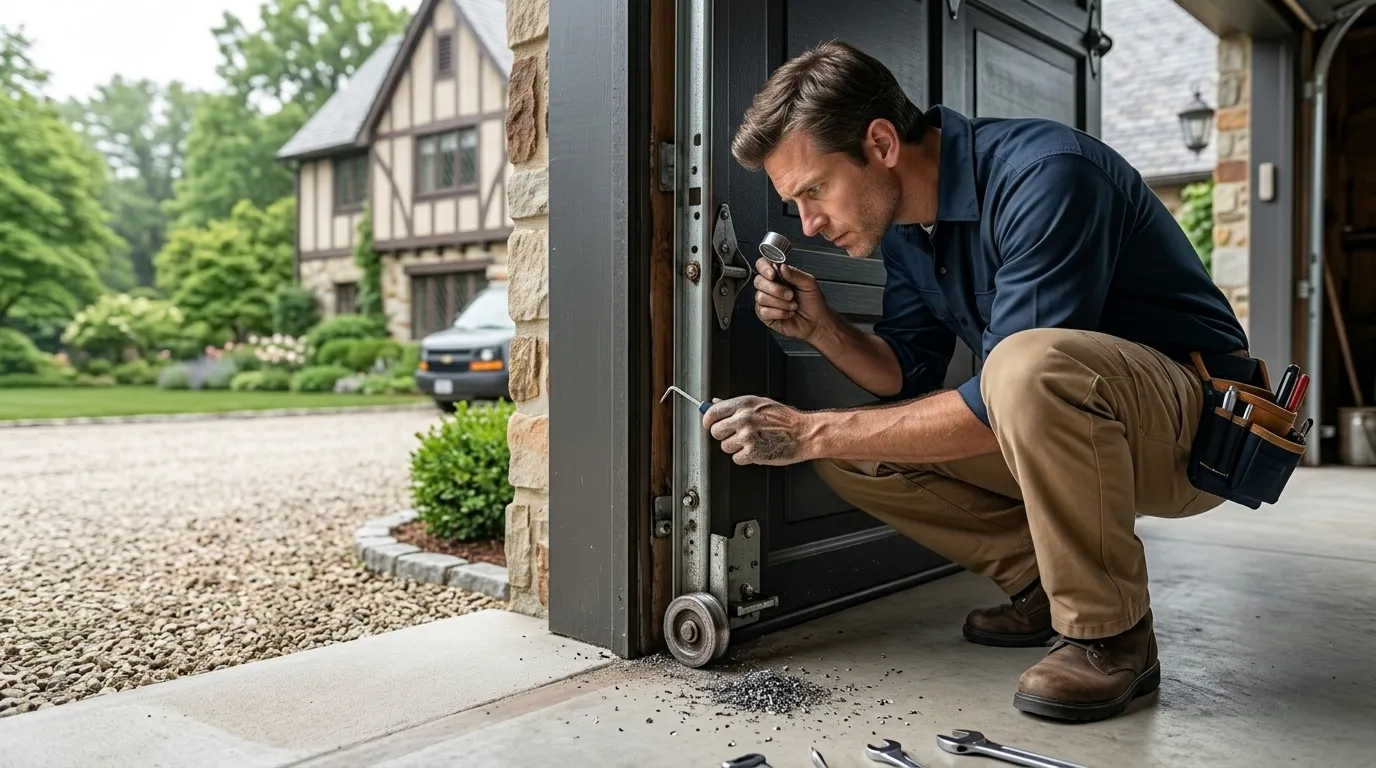
Put the housing age and the climate together and you get a fairly predictable failure pattern. A torsion spring installed in 1968 was rated for the door and the winters of 1968. Forty-plus winters of cold-cycle flexing later, the steel is fatigued in a way you can't see from the outside - it just lets go, usually on the coldest morning of the stretch, because that's when the metal is least forgiving. Rollers on original hardware are often steel or first-generation nylon, and both wear grooves into an unlined track faster in cold weather because the grease inside stiffens up.
The other thing going on is settling. A slab poured in the 1960s on this kind of ground has had decades to move, and the track brackets follow it. That's why a door that used to run smooth for years can start binding at one specific spot - it's not the opener, it's the track finding the new shape of the slab under it. None of this is dramatic, and none of it means the whole system is bad. It's just what original 1960s-70s hardware does after this many winters in this climate.
How we work
The Cost of This Job
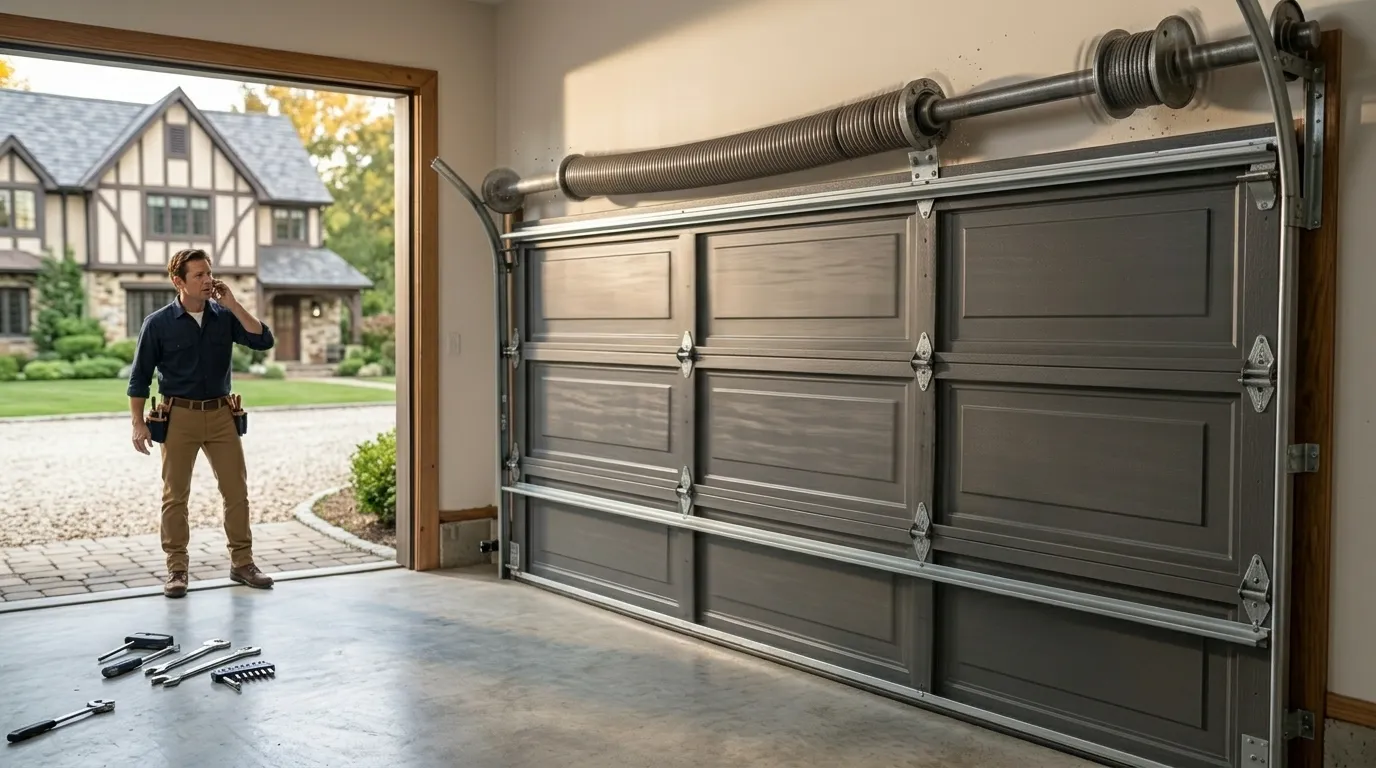
I can't hand you a number here without a look at the door, but I can tell you what drives the cost on a house like the ones common in Chicopee. First is parts availability - original hardware from the 1960s-70s wave often isn't stocked anymore, so a repair that would be a same-day part swap on a newer door can mean a wait, or a decision to go with modern equivalent hardware instead of an exact match. Second is scope: a broken spring alone is a straightforward repair, but if the rollers, cables, and track are all original and all fatigued together, fixing one and ignoring the rest just moves the next failure a few months down the road.
Third is the replace-versus-repair line. On a door old enough to be original to a 1960s or 70s build, there's a point where a repair costs most of what a new insulated door would cost, and the honest call is to replace rather than patch. With a median household income of $94,421 across the area, most owners are weighing that decision against a real budget, not an unlimited one - which is exactly why it's worth asking for the repair option and the replacement option side by side before deciding.
Questions
Common questions
Why did my garage door spring break in the middle of winter?
Cold makes steel more brittle and less forgiving of the fatigue that's built up over years of cycling. Chicopee's climate band is COLD severe, and a torsion spring that's original to a 1960s or 70s house has usually gone through decades of that cycle. It tends to let go on the coldest mornings because that's when the metal has the least give left in it.
Is my garage door hardware original to the house?
If your house was built in the housing wave common across this area - roughly 1938 to 1989, with most construction concentrated in the 1960s and 70s - there's a real chance the track, spring, and roller setup is original or close to it. That means single-layer panels and hardware sized to older standards, not the insulated, weight-matched systems installed today.
Should I repair or replace an old door?
It depends on how much of the system is original and how far along the wear is. A single broken spring on an otherwise sound door is worth repairing. If the rollers, track, and spring are all original and all showing fatigue, a repair often ends up costing close to what a new insulated door would, and replacement is the better use of the money.
Ready when you are
Need a garage door sorted in Chicopee?
Chicopee Garage Door Pros repairs and installs garage doors, springs and openers in Chicopee, MA and the surrounding area.