
Guide
Garage Doors in Chicopee: Built for a Different Era, Working in a Colder One
A look at why Chicopee's 1960s-era housing stock and cold winters shape spring wear, opener strain, and repair timing here - not generic maintenance advice.
Local detail
Season by Season
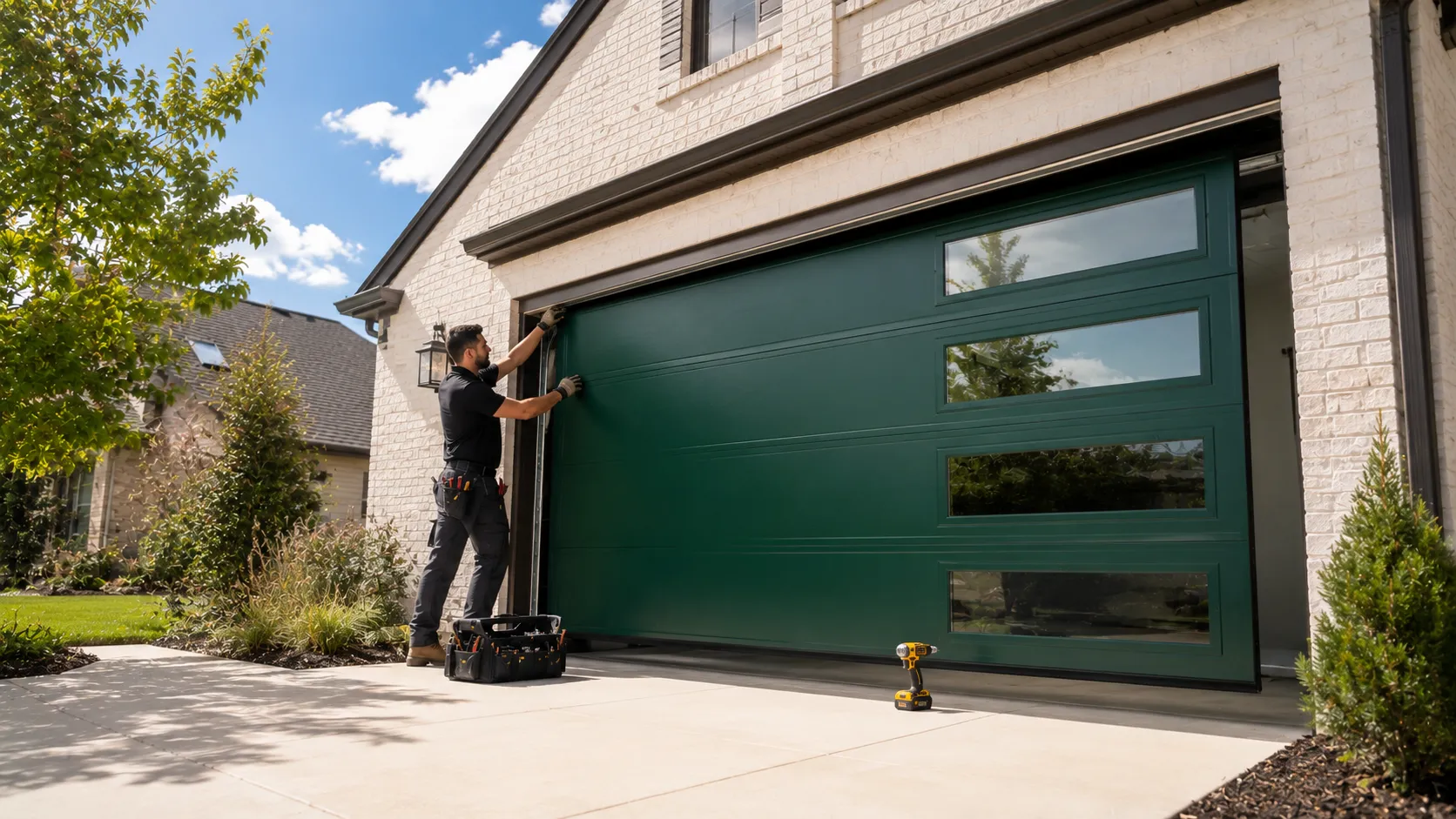
Chicopee doesn't have a mild season for garage door hardware. The COLD severe climate band this area sits in means steel torsion springs go through a real temperature swing every year - cold enough in January that the coil stiffens and loses a little wind tension, warm enough by July that the same coil moves easy and forgiving. A spring that's fine in August can bind and snap in February because the metal just doesn't flex the same way. Openers feel it too: gear-driven units built decades ago slow down in cold garages, and the safety reversal sensors get finicky when ice forms on the track rail overnight.
Spring in Chicopee is when the calls pick up, not because doors are worn out from winter use exactly, but because the freeze-thaw cycle finds every weak spot - a cable that was already fraying, a roller that was already dry. Fall is the one window to catch it before the cold sets back in, which is worth remembering if a door has been making noise since summer and nobody's called about it yet.
The area
What Local Conditions Do
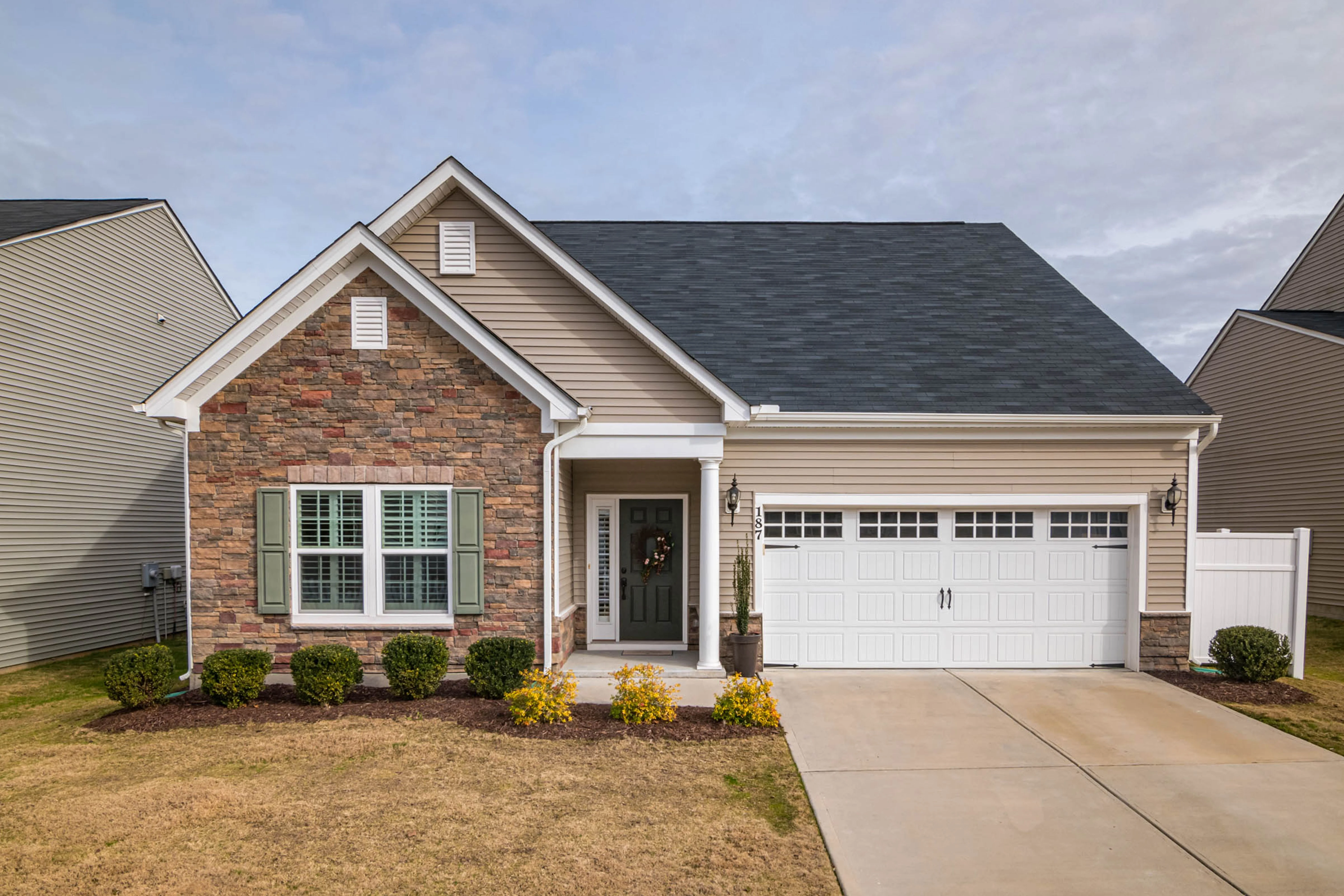
Housing in this area was mostly built between 1938 and 1989, with the typical home dating to 1965, and the bulk of it going up in that 1960s-to-70s wave across dozens of smaller pockets of town. That matters for garage doors because hardware from that build era was sized for lighter wood-panel doors, not the heavier insulated steel doors many homeowners have swapped in since. When a heavier door goes on old jamb hardware and an old-spec torsion spring, the spring works harder than it was built for, and it wears out faster than the manufacturer's cycle rating would suggest.
Combine that with the COLD severe climate here and you get a specific failure pattern: springs on these older setups tend to go in the coldest stretch of winter, when steel is least forgiving and the door is heaviest to lift by hand. It's not a coincidence that shows up on the same houses built in that same 20-year window - it's the hardware and the climate compounding on each other.
What we find
What Is Going On
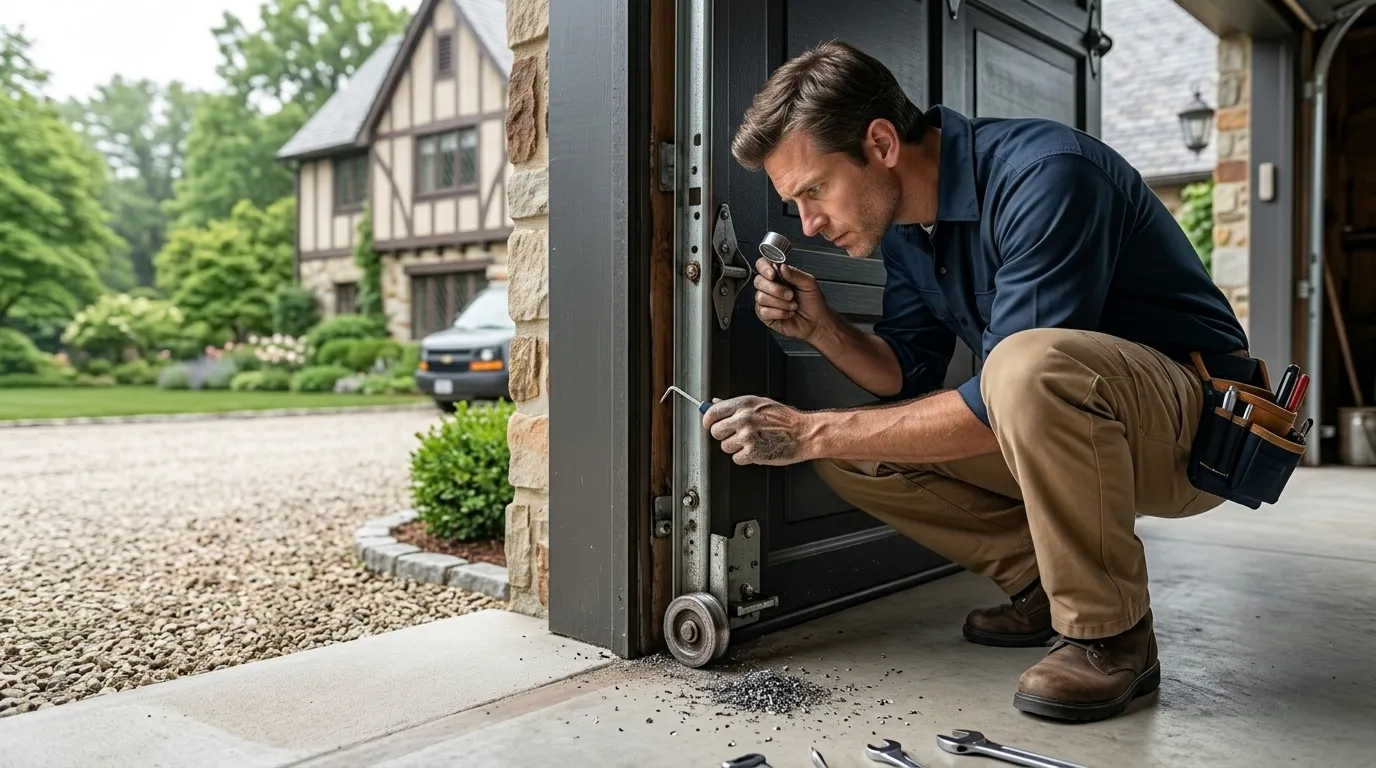
A lot of the service calls in Chicopee trace back to the gap between when a house was built and when its garage door was last actually replaced - not just repainted or patched. Original openers and springs from a 1965-built house are long past any reasonable service life, and even a door replaced once in the 1990s is due for another look. The symptom is usually the same: a door that's noticeably heavier to lift than it used to be, or an opener that strains and clicks before it moves the door at all.
One honest limitation here: not every noisy door needs a new opener or a full spring replacement. Sometimes it's a track out of alignment or rollers that need lubrication, and pushing a bigger fix on a smaller problem doesn't do anyone favors. A diagnosis on-site is the only way to tell the difference - nothing over the phone.
What's consistent, though, is that houses from that same building era in this area show up with the same failure points. That's a pattern, not a coincidence.
How we work
The Cost of This Job
There's no set price to quote here without seeing the door and the hardware - a torsion spring swap on standard hardware isn't the same job as replacing a full door that's been fighting an undersized spring for years. What's worth knowing is that the median household income across this service area runs $94,421, and with 51,068 owner-occupied houses in the mix, replacement over repeated patch repairs is often the more sensible call once a door and its hardware are both original to a 1960s or 70s build.
The honest math: a spring replacement on newer hardware is a contained job. A spring replacement on 60-year-old jamb brackets and a heavier-than-designed door often turns into a hardware conversation too, and that's a different estimate. We won't know which one applies to a specific door until we're standing in front of it.
Questions
Common questions
Why do garage door springs break more in the winter here?
Steel torsion springs stiffen and lose a little flex in cold weather, and Chicopee sits in a COLD severe climate band with real winter swings. A spring already worn from years of lifting a heavier-than-designed door is most likely to give out on the coldest days, not the mildest ones.
Is my garage door hardware original to my house?
If your house was built in the 1960s or 70s, which covers most of this area, there's a decent chance the jamb hardware or opener predates any door replacement you've done since. Original hardware from that era wasn't sized for today's heavier insulated steel doors.
How do I know if I need a repair or a full replacement?
That depends on the door and the hardware together, not just one symptom. A door that's suddenly heavy to lift, paired with hardware that's original to a 1960s-70s build, often points toward replacement being the more sensible long-term call rather than another patch repair.
Ready when you are
Need a garage door sorted in Chicopee?
Chicopee Garage Door Pros repairs and installs garage doors, springs and openers in Chicopee, MA and the surrounding area.